Wrongful Termination: What Employees Need to Know About Illegal Firing
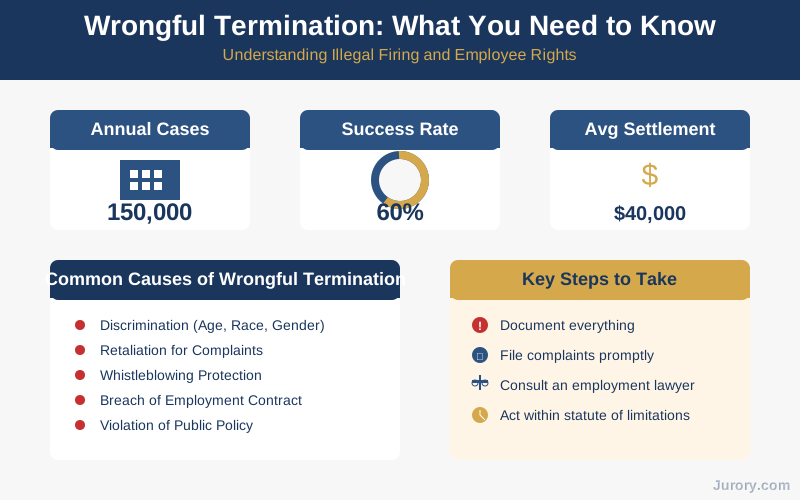
Most people think employers can fire anyone for any reason. They're wrong. About 150,000 wrongful termination cases get filed every year in the United States, and roughly 60 percent of employees who pursue these claims receive some form of compensation.
What Counts as Wrongful Termination
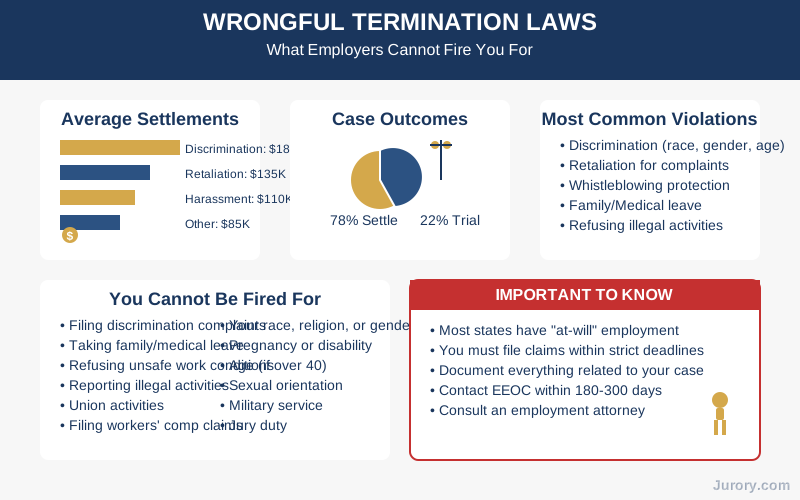
Wrongful termination isn't just getting fired unfairly. It means getting terminated in violation of federal or state laws, your employment contract, or established company policies that create legal obligations.
At-will employment dominates most states. But even at-will employees can't be fired for illegal reasons like discrimination based on race, gender, age, religion, disability, or national origin. And filing workers' compensation claims? That's protected too. Reporting safety violations, refusing to commit crimes for your employer, or taking legally-mandated family leave also fall under wrongful termination protections.
Contract employees have different protections. If you've got a written employment agreement specifying termination procedures or requiring "good cause" for firing, your employer must follow those terms. Break them? That's wrongful termination. Union members typically enjoy additional safeguards through collective bargaining agreements that outline specific disciplinary procedures and appeal processes.
Retaliation cases make up about 55 percent of all wrongful termination claims. Employers can't fire you for exercising legal rights, reporting illegal activities, or cooperating with government investigations. The key word? Timing. Getting fired shortly after protected activity creates what lawyers call "temporal proximity" – strong evidence of retaliation.
The Legal Process for Wrongful Termination Claims
⚖️ Need legal help? Submit your case for a free evaluation and get matched with qualified Employment Law attorneys.
First step? Don't panic.
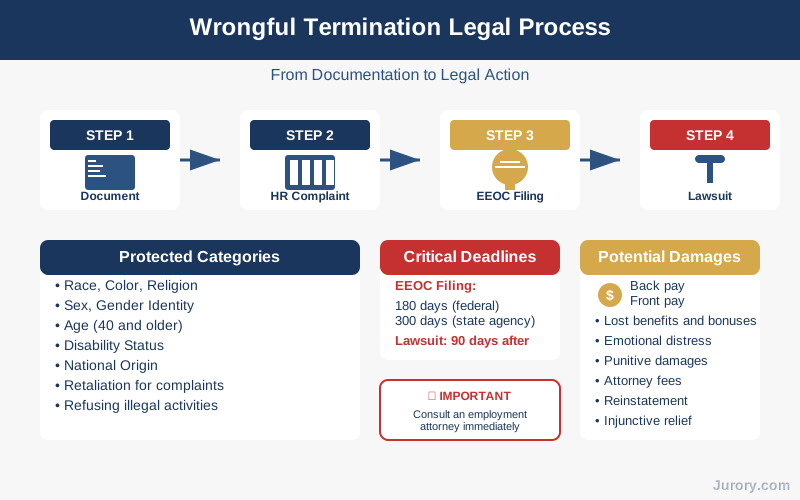
Document everything immediately after termination, including the exact words used during firing, any witnesses present, and circumstances leading up to dismissal. Save emails, performance reviews, and company communications on personal devices or cloud storage you control. Most people wait too long to gather evidence, and companies often restrict access to systems within hours of termination.
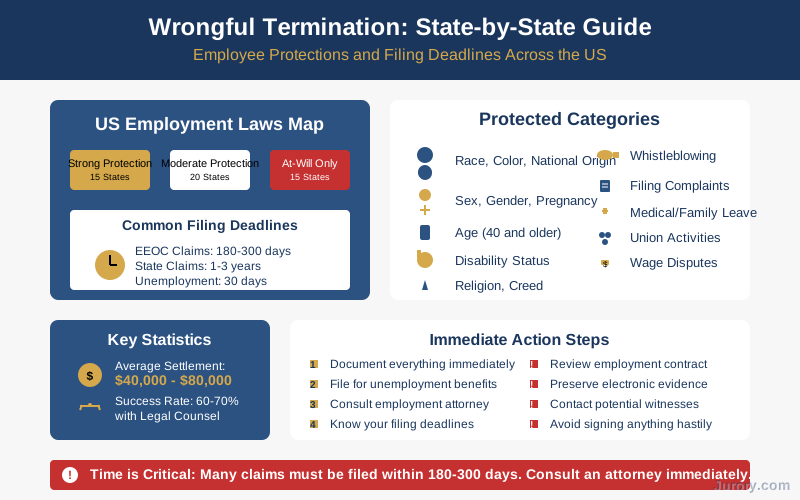
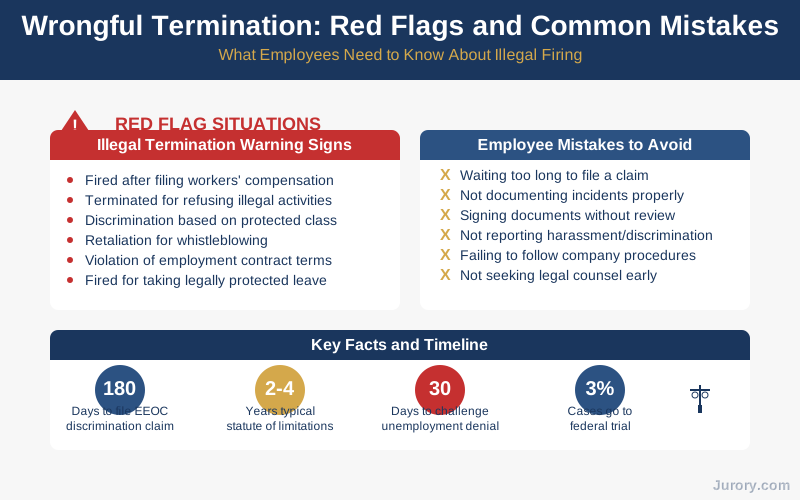
Filing requirements vary dramatically by claim type. Discrimination cases typically require EEOC complaints within 180 to 300 days, depending on your state's fair employment agency. But breach of contract claims might give you several years to file suit. Then again, some states have shorter windows. Delaware requires discrimination complaints within 90 days – much tighter than federal deadlines.
The EEOC process takes 10 to 15 months on average. After filing, you'll receive a "right to sue" letter allowing federal court action. Skip this step for discrimination claims? You can't sue later. State agencies operate differently, and some allow direct court filing without administrative exhaustion.
Lawyers evaluate cases based on damages, evidence strength, and defendant's ability to pay. Strong retaliation cases with clear timelines and good documentation settle 70 percent of the time. Weaker cases face uphill battles, especially against cash-strapped small businesses that can't satisfy judgments anyway.
Costs and Legal Fees
Employment lawyers typically work on contingency fees ranging from 33 to 40 percent of any recovery. No win, no fee – but you might still owe case expenses like court filing fees, depositions, and expert witnesses. These costs can reach 5,000 to 15,000 dollars in complex cases.
Hourly rates vary wildly by location. Top employment attorneys in major cities charge 400 to 800 dollars per hour. Smaller markets see rates around 250 to 400 dollars hourly. But most wrongful termination cases use contingency arrangements because clients can't afford big upfront payments after losing their jobs.
Filing fees alone cost several hundred dollars in most states. Missouri charges 350 dollars for district court filing. Kentucky's federal court filing runs 400 dollars. Add service of process, document copying, and potential appeal bonds – costs mount quickly.
Some cases require expensive expert testimony. Economists calculate lost wages and benefits, while industry experts explain standard practices. Expert fees typically run 300 to 500 dollars per hour, with total costs reaching 10,000 to 25,000 dollars for complex cases involving high earners or specialized industries.
State Laws and Variations
Employment laws differ significantly across states, creating a patchwork of protections and procedures that can confuse both employees and employers.
Missouri follows strict at-will employment but provides strong whistleblower protections under the Missouri Human Rights Act. Discrimination complaints must be filed within 180 days with the Missouri Commission on Human Rights. The state also recognizes "public policy" exceptions for terminations that violate clearly established legal rights or public interests.
Kentucky expanded wrongful termination protections in 2019. The Kentucky Civil Rights Act now covers employers with eight or more employees (down from the previous 15-employee threshold), and the state gives discrimination complainants 180 days to file with the Kentucky Commission on Human Rights. Kentucky also recognizes implied employment contracts based on employee handbooks.
Minnesota offers some of the strongest employee protections nationwide. The state's whistleblower statute covers both public and private sector employees, and Minnesota law prohibits termination for refusing to attend employer meetings about political or religious matters. Discrimination complaints can be filed within one year – much longer than most states.
Delaware takes a business-friendly approach with limited wrongful termination protections beyond federal minimums. The state requires discrimination complaints within 90 days and doesn't recognize many common law wrongful termination theories that other states accept.
South Dakota remains heavily employer-favored with minimal wrongful termination protections. The state follows pure at-will employment with few exceptions, and South Dakota courts rarely recognize implied contract theories or public policy exceptions that provide employee protections in other jurisdictions.
Common Mistakes Employees Make
- Waiting too long to file complaints – each type of claim has different deadlines, and missing them kills your case permanently
- Failing to preserve evidence immediately after termination, especially emails and documents stored on company systems
- Not documenting the actual termination meeting details while memory remains fresh
- Assuming all unfair firings are illegal (they're not – employers can fire for stupid reasons, just not illegal ones)
- Signing separation agreements without legal review, potentially waiving valuable claims for minimal severance payments
Frequently Asked Questions
Can I be fired for filing a workers' compensation claim?
Absolutely not. Every state prohibits retaliation for filing legitimate workers' comp claims. If you're fired shortly after filing, that's strong evidence of wrongful termination and you should contact an employment attorney immediately.
How much money can I recover in a wrongful termination case?
Damages vary widely based on your salary, length of unemployment, and case type. Most settlements range from 15,000 to 150,000 dollars, though high-level executives sometimes recover millions. Back pay, front pay, emotional distress, and punitive damages all factor into final amounts.
What if I signed a non-compete agreement – does that affect my case?
Non-compete agreements don't prevent wrongful termination claims, but they might limit your ability to find new employment and reduce damages. Courts often refuse to enforce non-competes when employers fire employees illegally.
⚖️ Get Free Legal Help
Need legal assistance with Employment Law matters? Our platform connects you with experienced attorneys who can help. Describe your situation, and local lawyers will review your case and reach out to you directly.
Start Your Free Case Evaluation