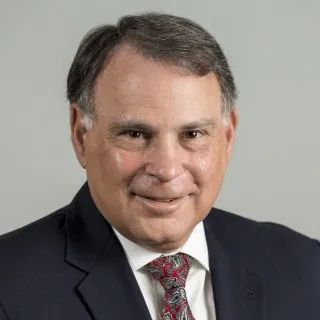
About Vincent A
Vincent A Wenners built his legal foundation in New England. He earned a B.A. in English from Saint Anselm College in 1964, followed by a J.D. from Boston College Law School in 1967. He later pursued advanced tax study and completed an LL.M. in Taxation at Boston University School of Law. Those academic steps shaped a practice that spans both trial work and tax matters.
After law school, Wenners entered legal practice concentrated in New Hampshire, and he holds admission to the United States Court of Appeals for the First Circuit. Over decades at the bar he has handled matters that touch on state and federal law. His career has combined courtroom appearances, appellate filings, and advisory work for clients who face complex tax or business-related legal questions.
Clients and colleagues describe him as precise in analysis. He prefers careful preparation. That shows in written briefs and in court presentations. He has experience drafting pleadings and motions in trial court and preparing appellate briefs for the First Circuit. He has argued procedural points and substantive issues, relying on both statutory and case law to develop legal positions.
The LL.M. in Taxation informs a substantial portion of his practice. That advanced degree provided technical training in federal tax law, which he draws on for counseling and controversy work. He has advised on tax consequences tied to business transactions and has represented clients in disputes where tax issues are central. He also handles matters that intersect tax and corporate governance or estate concerns.
Professional membership remains part of his routine. He maintains current memberships in professional associations, regularly engaging with peers to stay abreast of changes in law and procedure. That engagement supports both trial and appellate work, and it helps him keep pace with evolving tax rules.
He maintains an office at 27 Bay Street, where he sees clients and prepares filings. His practice blends litigation and advisory work, handling cases that require both courtroom advocacy and detailed tax analysis. He continues to accept matters in New Hampshire and to appear in federal appellate proceedings when the issues call for it.
As of 2026 he continues to practice, combining tax training and courtroom experience to represent individuals and businesses in New Hampshire and in matters before the First Circuit. His current practice focuses on tax-related legal work and appellate representation.