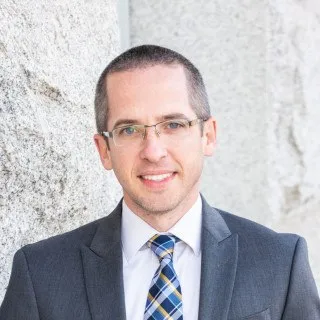
About Devin W.
Devin W. Quackenbush earned a Bachelor of Arts from Brigham Young University in 2006 and completed his Juris Doctor at Creighton University School of Law in 2010. He arrived in the practice of law after a steady progression through law school and early legal roles that exposed him to both courtroom procedure and case preparation.
He began his professional legal career as a judicial law clerk for the Alaska Court System in 2010. The clerkship offered early experience in legal research and opinion drafting. Those skills carried him into a series of associate roles over the next several years, where he handled client matters and supported litigation teams.
From 2011 to 2013 he worked at Clapp, Peterson, Tiemessen, Thorsness & Johnson, LLC, and then moved on to Bearnson & Caldwell, LLC in 2012. In 2013 he joined Heideman & Associates as an associate lawyer. Each position added layers of courtroom exposure and practical casework. In 2014 he took the next step and established his own practice, founding The Law Office of Devin W. Quackenbush, PLLC.
Quackenbush is admitted to practice in Alaska, Idaho and Utah, and he holds admission to the Ninth and Tenth U.S. Circuit Courts of Appeal. He also pursued formal training in mediation through the Werner Institute at Creighton University School of Law. That certification reflects an investment in dispute resolution techniques beyond traditional litigation.
He has been a member of the J. Reuben Clark Law Society since 2007. The society’s membership runs alongside his legal career and provides a professional network that spans academics and practitioners.
His career shows movement from institutional roles into independent practice. The clerkship introduced him to judicial reasoning. The associate positions deepened his experience with client representation and court procedures. Launching his own practice in 2014 shifted responsibility for case direction and client relations squarely onto him.
He currently practices through QUACKENBUSH LEGAL, PLLC. He handles matters in the jurisdictions where he is admitted and regularly appears in federal appellate courts when cases reach that level.