About Charlena
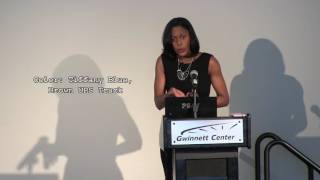
Charlena Thorpe built a career at the meeting point of engineering and law. Her path began in classrooms at the Georgia Institute of Technology, where she earned a Bachelor of Science in Electrical Engineering in 1989 and a Master of Science in the same field in 1994. She then turned to law, completing her J.D. at Emory University in 1997.
Her academic background shaped the work she would pursue. After Emory, Thorpe moved into intellectual property and patent practice. She joined the Georgia State Bar in 2000 and is admitted to practice in Georgia. She is also a registered patent attorney with the U.S. Patent and Trademark Office, a credential that reflects the combination of her technical training and legal education.
Thorpe’s early years in the profession were informed by technical expertise. An electrical engineering foundation gave her a working fluency in the language of circuits, systems and product development. That fluency proved useful when drafting and prosecuting patent applications and when counseling inventors and companies on IP strategy. She learned to translate complex technical concepts into the precise legal descriptions required for patent applications.
Colleagues describe her approach as methodical. She tends to prioritize clarity in patent specifications and arguments at the PTO. Her experience spans preparing applications, responding to office actions, and advising on claim scope. The combination of degrees from Georgia Tech and a law degree from Emory positions her to work on electrical and software-related inventions as well as hardware systems.
Thorpe has remained tied to Georgia in her professional life. While she maintains membership in the Georgia State Bar, she has also worked in and around Duluth. That local presence has brought clients who need both technical assessment and hands-on patent prosecution. Her USPTO registration allows her to represent inventors before the federal patent office while her Georgia admission covers state-level legal matters.
She has not sought public office or high-profile litigation roles; instead, her practice has been centered on client work in intellectual property, often behind the scenes. She has handled routine and complex prosecution matters, helping clients secure patent protection and navigate examination hurdles.
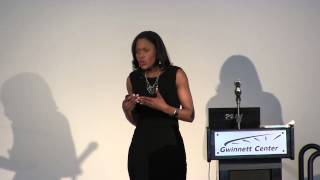
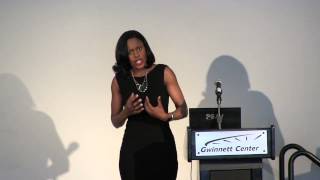
She currently practices in Duluth, Georgia, concentrating on patent prosecution and other intellectual property matters.