Understanding Wills: Essential Guide to Creating Your Last Testament
A will serves as one of the most fundamental documents in estate planning, dictating how assets get distributed after death. Without one, state intestacy laws determine asset distribution, often contrary to the deceased's wishes. Creating a properly executed will ensures loved ones receive intended inheritances while minimizing family disputes and legal complications.
What is a Will
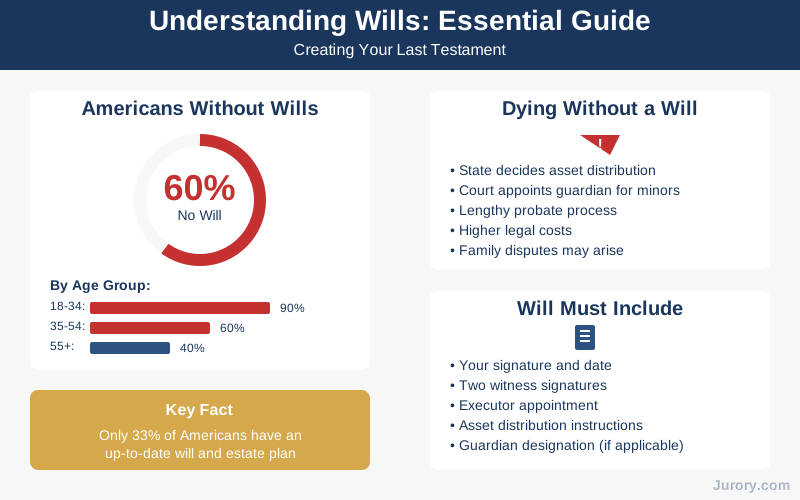
A will, formally called a last will and testament, is a legal document that specifies how a person's assets should be distributed upon their death. The person creating the will is called the testator. Beyond asset distribution, wills serve several critical functions in estate planning.
Most people think wills only handle money and property. That's partially true. But wills also name guardians for minor children, designate executors to manage the estate, and can include funeral instructions. The executor, also called a personal representative in some states, handles paying debts, filing tax returns, and distributing assets according to the will's terms.
Valid wills must meet specific legal requirements. The testator must be at least 18 years old and of sound mind when signing. The document needs clear language identifying beneficiaries and their inheritances. Two witnesses typically must observe the signing, though requirements vary by state.
Here's what many don't realize: wills only control probate assets. Bank accounts with named beneficiaries, retirement accounts, and life insurance policies pass directly to beneficiaries outside the will. Joint property with survivorship rights also bypasses the will. This distinction affects roughly 60 percent of most people's total assets.
Holographic wills, written entirely in the testator's handwriting, are valid in about 26 states. These don't require witnesses but create more opportunities for challenges. Typed wills with proper witnessing remain the gold standard for enforceability.
How the Will Process Works
⚖️ Need legal help? Submit your case for a free evaluation and get matched with qualified Estate Planning attorneys.
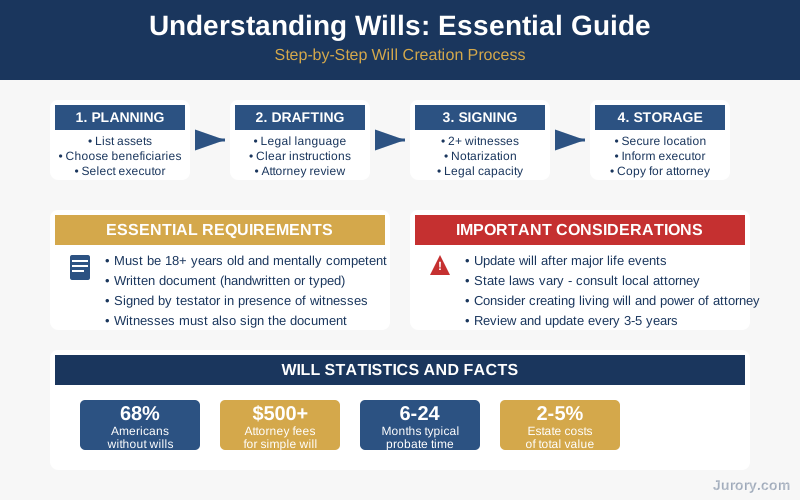
Creating a will involves several distinct steps. Planning comes first. The testator must inventory all assets, including real estate, bank accounts, investments, personal property, and business interests. This inventory should include approximate values and account numbers for the executor's reference.
Choosing beneficiaries requires careful consideration. Primary beneficiaries receive the main bequests. Contingent beneficiaries inherit if primary beneficiaries predecease the testator. Many wills include residuary clauses that distribute any remaining assets not specifically mentioned elsewhere in the document.
Executor selection proves crucial. This person will spend months or years managing the estate. They need financial competence, availability, and trustworthiness. Naming an alternate executor prevents complications if the first choice can't serve. The executor can be a family member, friend, or professional like an attorney or bank.
Drafting the actual document follows specific legal language. Professional attorneys ensure compliance with state laws and reduce ambiguity that causes disputes. The will should include a clear opening statement identifying the testator, revocation of previous wills, and systematic asset distribution.
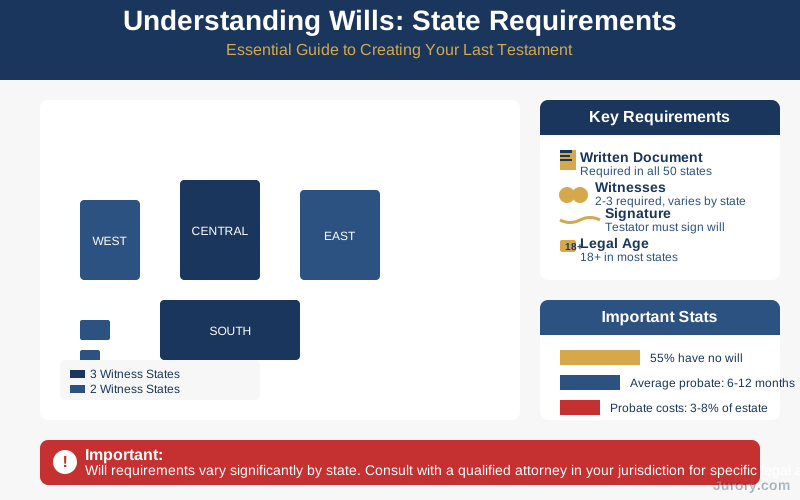
But here's the critical part: execution requirements vary significantly by state. Most states require the testator to sign in the presence of two disinterested witnesses - people who don't inherit under the will. Some states require notarization. Louisiana requires three witnesses. The witnesses must also sign, acknowledging they observed the testator's signature.
After execution, proper storage matters. Many people keep original wills in bank safety deposit boxes, but some states seal these upon death. Attorney offices, fireproof home safes, or court clerk offices offer alternatives. Copies should be given to the executor and key family members, but only the original will gets probated.
Costs and Fees
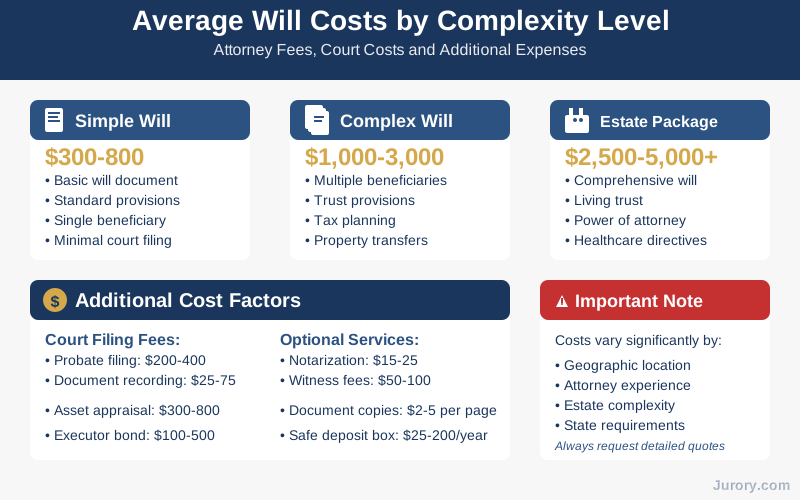
Will preparation costs vary dramatically based on complexity and preparation method. Simple wills prepared by attorneys typically cost between 300 and 800 dollars. Complex wills involving trusts, business interests, or tax planning can range from 1,500 to 5,000 dollars or more.
Online will preparation services charge between 40 and 200 dollars. These work for straightforward situations but lack personalized legal advice. The software asks questions and generates documents based on responses. Thing is, these services can't spot potential issues specific to individual circumstances.
Do-it-yourself approaches cost the least upfront. Blank will forms cost under 50 dollars. But mistakes in DIY wills often cost estates thousands in probate complications. Invalid execution, unclear language, or missing provisions create expensive legal battles that consume estate assets.
Take probate costs for comparison. Estates with valid, clear wills typically spend 3 to 7 percent of total estate value on probate expenses. Estates with problematic or missing wills can spend 10 to 15 percent on legal fees, court costs, and administrative expenses. A 500-dollar investment in proper will preparation can save a 200,000-dollar estate 20,000 dollars in probate costs.
Additional costs might include notarization fees ranging from 5 to 25 dollars per signature. Some people choose self-proving affidavits, which cost an extra 15 to 50 dollars but streamline probate by eliminating the need to locate witnesses later.
State-Specific Information
Will requirements differ significantly across states, affecting validity and probate procedures. Understanding these variations prevents costly mistakes and ensures proper execution.
California requires two witnesses for will execution and doesn't mandate notarization. The state recognizes holographic wills written entirely in the testator's handwriting. California's probate process typically takes 9 to 18 months, with court fees starting around 465 dollars for estates valued under 100,000 dollars. Executor compensation follows a statutory fee schedule, starting at 4 percent of the first 100,000 dollars in estate value.
South Carolina follows different rules. The state requires two witnesses and notarization for typed wills. Holographic wills aren't recognized unless they comply with standard witnessing requirements. Probate filing fees start at 185 dollars, and the process often concludes within 8 to 12 months for uncontested estates.
Montana accepts holographic wills and follows the Uniform Probate Code. Two witnesses are required for typed wills, but notarization isn't mandatory. The state offers simplified probate procedures for estates under 50,000 dollars, reducing costs and timeframes significantly.
Alaska presents unique opportunities. The state doesn't impose inheritance taxes and offers dynasty trust options for wealthy families. Two witnesses are required, and holographic wills receive recognition. Alaska also allows modification of community property laws through written agreements.
Rhode Island requires two witnesses and follows traditional probate procedures. The state doesn't recognize holographic wills, making proper execution essential. Filing fees start around 95 dollars for small estates, but complex estates face higher administrative costs.
Common Mistakes to Avoid
- Improper execution: Failing to follow state witnessing requirements invalidates wills entirely. Always verify your state's specific rules before signing.
- Outdated beneficiary information: Not updating wills after marriages, divorces, births, or deaths creates confusion and potential legal challenges during probate.
- Vague asset descriptions: Using unclear language like "my jewelry" or "some money" leads to disputes among beneficiaries about specific items and amounts.
- Forgetting digital assets: Modern wills should address social media accounts, cryptocurrency, online banking, and digital photo storage that have monetary or sentimental value.
- No executor backup plan: Naming only one executor without alternatives causes delays if that person can't or won't serve when needed.
Frequently Asked Questions
Can I write my own will without an attorney?
Yes, you can write your own will, but it must meet your state's legal requirements for validity. Many states accept handwritten wills, while others require typing, witnessing, and sometimes notarization. The risk is that DIY wills often contain errors or ambiguities that create expensive probate problems later.
How often should I update my will?
Review your will every 3 to 5 years or after major life changes like marriage, divorce, births, deaths, or significant asset changes. Federal and state tax law changes might also necessitate updates. An outdated will can distribute assets contrary to your current wishes and family situation.
What happens if I die without a will?
If you die without a will, state intestacy laws determine how your assets are distributed among surviving relatives. Typically, spouses and children inherit first, followed by parents and siblings. This process often doesn't match people's actual wishes and can exclude unmarried partners, stepchildren, or close friends completely.
⚖️ Get Free Legal Help
Need legal assistance with Estate Planning matters? Our platform connects you with experienced attorneys who can help. Describe your situation, and local lawyers will review your case and reach out to you directly.
Start Your Free Case Evaluation