Family Immigration: How to Bring Relatives to the United States Legally
About 66 percent of all green cards issued each year go to family members of U.S. citizens and permanent residents, making family-based immigration the backbone of America's immigration system. But the process isn't simple. And it definitely isn't quick.
What Is Family Immigration?
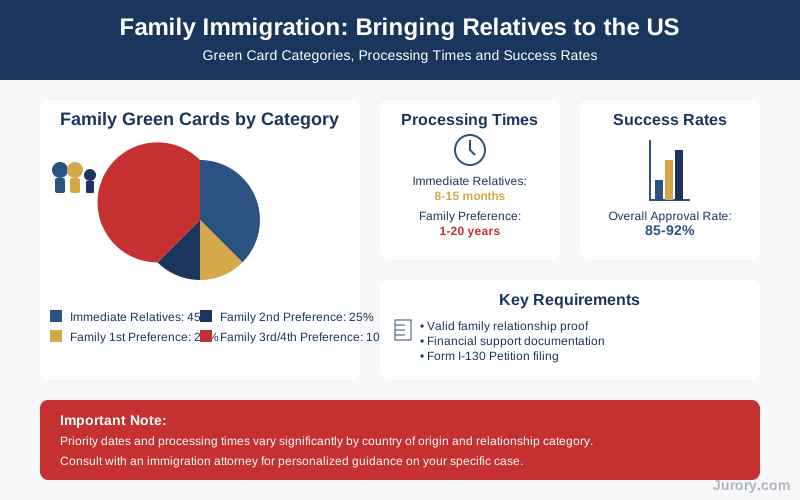
Family immigration lets U.S. citizens and permanent residents sponsor certain relatives for green cards. Think of it as a legal way to reunite families across borders. The system divides eligible relatives into two main categories: immediate relatives and family preference categories.
Immediate relatives get special treatment. They include spouses of U.S. citizens, unmarried children under 21, and parents of adult U.S. citizens. No waiting lists exist for these relationships, though processing still takes months.
Everyone else falls into preference categories with annual limits and lengthy wait times. We're talking about adult children, married children, siblings, and spouses of permanent residents. Some wait decades. And that's not an exaggeration - Filipino siblings of U.S. citizens currently wait about 24 years for their priority date to become current.
Here's the catch: only citizens can sponsor parents and siblings. Permanent residents can't petition for these relatives at all, which surprises many people who assume green card holders have the same sponsorship rights.
How the Process Works
⚖️ Need legal help? Submit your case for a free evaluation and get matched with qualified Immigration Law attorneys.
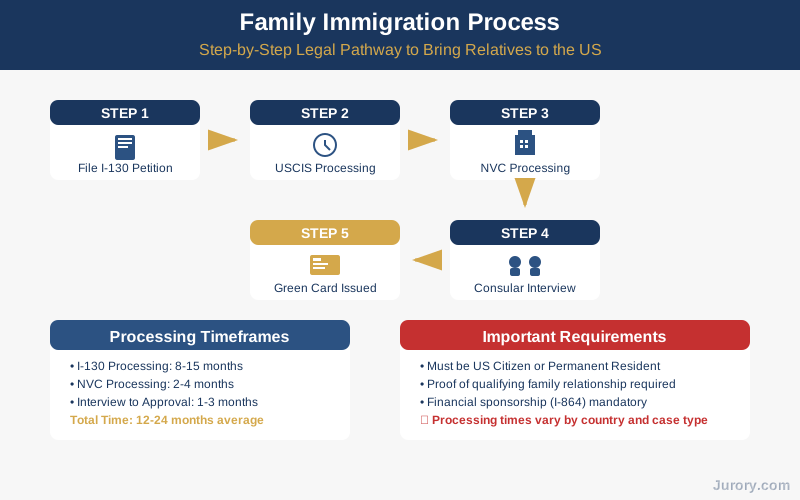
The sponsoring relative files Form I-130 with USCIS first. This petition establishes the family relationship and gets the process rolling. Filing fees currently cost 535 dollars, and USCIS takes 13 to 25 months to approve most petitions.
But approval doesn't mean your relative gets a green card immediately.
If the beneficiary lives overseas, the approved petition goes to the National Visa Center, which collects additional documents and fees before scheduling a consular interview. Total government fees for consular processing reach about 1,200 dollars per person when you include the immigrant visa fee, medical exam, and other required costs.
Relatives already in the United States might qualify to adjust status here instead of going through consular processing abroad. This option works best for immediate relatives who entered legally, though some exceptions exist for people who entered without inspection but qualify for other protections.
The sponsor must also file Form I-864, promising to financially support the immigrant at 125 percent of the federal poverty guidelines. This obligation continues until the immigrant becomes a citizen, works for 40 quarters, or dies. It's legally binding. Courts can and do enforce these support agreements.
Costs and Fees
Government fees alone run between 1,500 and 2,000 dollars per case, but that's just the beginning. Most families hire attorneys, adding another 3,000 to 8,000 dollars depending on case complexity and location.
Medical exams cost 200 to 500 dollars per person and must be performed by USCIS-approved doctors. Document translation fees vary wildly - simple birth certificates might cost 25 dollars while complex divorce decrees can run 200 dollars or more.
Then there's the affidavit of support requirement. Sponsors must prove income at 125 percent of poverty guidelines, which means a family of four needs to show at least 33,750 dollars in annual income. Can't meet the requirement? You'll need a joint sponsor who can.
State-Specific Information
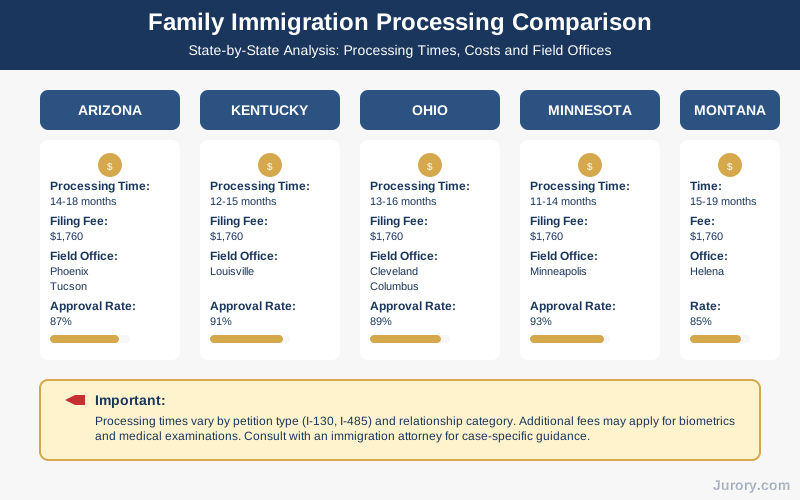
Arizona processes family immigration cases through the Phoenix field office, which currently shows processing delays of 16 to 21 months for adjustment of status applications. The state's large immigrant population means longer waits, and finding USCIS-approved medical examiners outside Phoenix and Tucson can be challenging.
Kentucky routes cases through either Louisville or the Atlanta field office depending on location. Processing times hover around 14 to 18 months. The state offers relatively affordable legal services, with many attorneys charging 4,000 to 6,000 dollars for straightforward family cases.
Ohio splits cases between Cleveland, Columbus, and Detroit field offices. Cleveland shows the fastest processing at about 12 to 15 months, while Detroit cases often stretch longer due to higher volume.
Minnesota handles cases through the Twin Cities field office, known for thorough but slow processing. Expect 18 to 24 months for adjustment cases. But the state's strong immigrant services network means better support throughout the process.
Montana routes all cases through Seattle, creating unique challenges since most attorneys and immigrants live far from the processing center. Video interviews became more common during COVID and continue for many Montana cases.
Common Mistakes That Delay Cases
• Filing petitions with wrong forms - many people confuse I-130 family petitions with other immigration forms
• Submitting poor quality translations that USCIS rejects, forcing refiling and delays
• Forgetting to update addresses during the multi-year process
• Assuming permanent residents can sponsor the same relatives as citizens
• Not maintaining legal status while adjustment applications are pending, which can derail everything
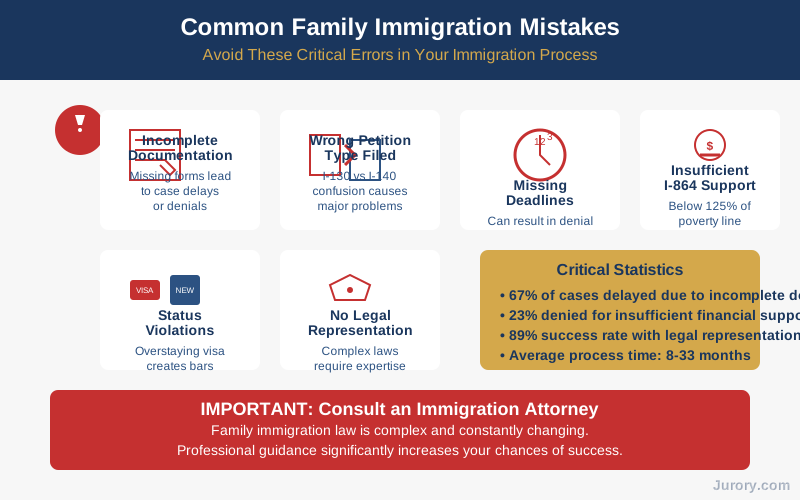
Most people think family immigration guarantees success if the relationship is real. Actually, thousands of cases get denied every year for paperwork problems, missed deadlines, and failure to meet financial requirements.
The system rewards preparation and patience. Rushing leads to mistakes. And mistakes cost time and money that most families can't afford to waste.
Smart families start gathering documents early, even before filing the initial petition. Birth certificates, marriage licenses, and divorce decrees from foreign countries take weeks or months to obtain and translate properly.
Frequently Asked Questions
Can permanent residents sponsor their parents for green cards?
No, only U.S. citizens can petition for their parents. Permanent residents can sponsor spouses and unmarried children, but parents and siblings require citizenship first.
How long does family immigration really take from start to finish?
Immediate relatives of citizens typically wait 18 to 36 months total. Other family members face much longer waits - sometimes 10 to 20 years depending on country of birth and relationship category.
What happens if the sponsor dies during the immigration process?
The petition usually dies with the sponsor, though some cases can continue under special humanitarian provisions. Having backup sponsors or pursuing other immigration options becomes critical.
⚖️ Get Free Legal Help
Need legal assistance with Immigration Law matters? Our platform connects you with experienced attorneys who can help. Describe your situation, and local lawyers will review your case and reach out to you directly.
Start Your Free Case Evaluation