Domestic Violence Laws and Legal Protections Under Family Law
Domestic violence cases cross multiple areas of law simultaneously. Criminal charges happen in one courtroom while family court handles divorce, custody, and protection orders in another.
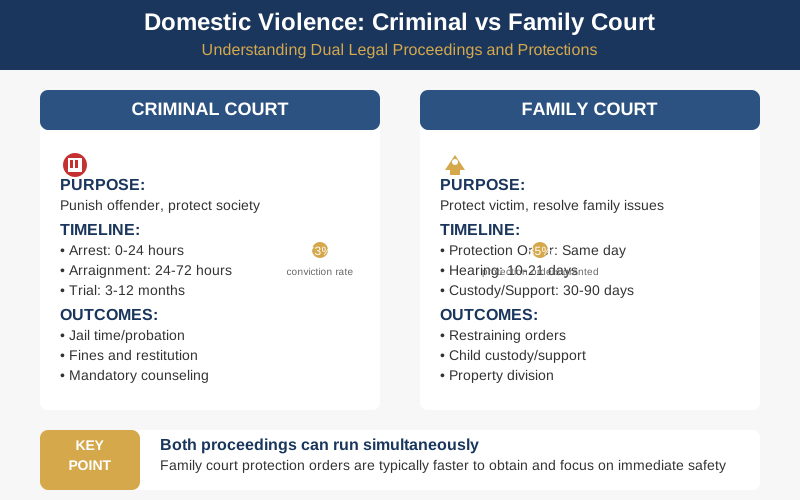
The legal system treats domestic violence as both a crime and a family matter. This creates complexity. But it also provides multiple paths for protection and justice.
Understanding Protection Orders and Restraining Orders
Protection orders go by different names in different states. Restraining orders. Protective orders. Orders of protection.
They all serve the same basic function - legally requiring an abuser to stay away from their victim. The short answer: these orders can be issued within 24 to 48 hours in most states. The longer explanation involves temporary orders, permanent orders, and varying levels of protection.
Take California for example - the state issues three types of restraining orders in domestic violence cases. Emergency protective orders last up to seven days and can be requested by police officers at the scene. Temporary restraining orders extend protection for about three weeks until a court hearing. And permanent orders can last up to five years.
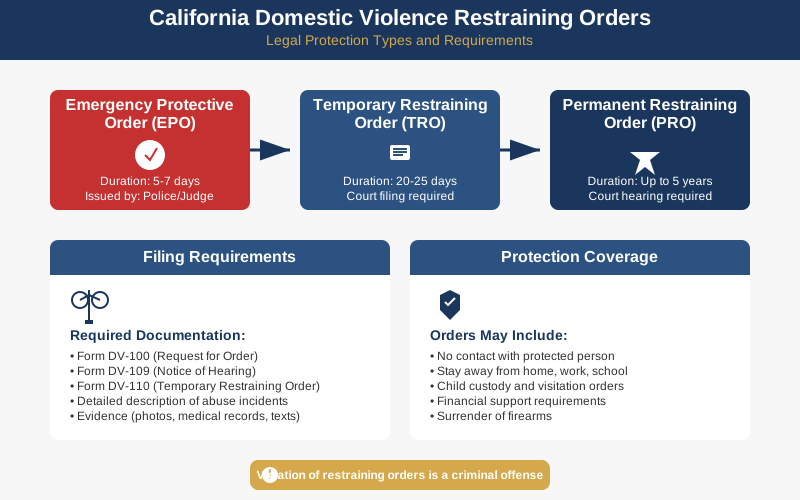
Most people assume protection orders only cover physical contact. That's wrong. Modern protection orders typically include:
- No contact provisions - no calls, texts, emails, or social media contact
- Stay-away orders requiring the abuser to maintain specific distances from home, work, school, or children's locations
- Temporary custody arrangements that immediately remove children from dangerous situations
- Move-out orders that require the abuser to leave a shared residence, even if they own or rent the property
- Financial provisions covering temporary support, bill payments, or protection of assets
Violation carries serious consequences. Criminal charges. Jail time. And judges don't take violations lightly.
Criminal Charges vs. Civil Family Court Cases
⚖️ Need legal help? Submit your case for a free evaluation and get matched with qualified Domestic Violence attorneys.
Here's the thing: domestic violence creates two separate legal tracks that run simultaneously but independently.
Criminal court focuses on punishment. The state prosecutes the abuser for crimes like assault, battery, stalking, or harassment. Victims don't control these cases - prosecutors do. And prosecutors can move forward even if victims don't want to press charges.
Family court handles the civil side. Divorce proceedings. Child custody disputes. Property division. Protection orders. Victims control these cases and can drop them at any time.
The reality is that outcomes in one court don't automatically determine outcomes in the other. Someone can be acquitted of criminal charges but still lose custody or face restrictions in family court. The burden of proof differs - criminal cases require proof beyond reasonable doubt while family court uses the lower preponderance of evidence standard.
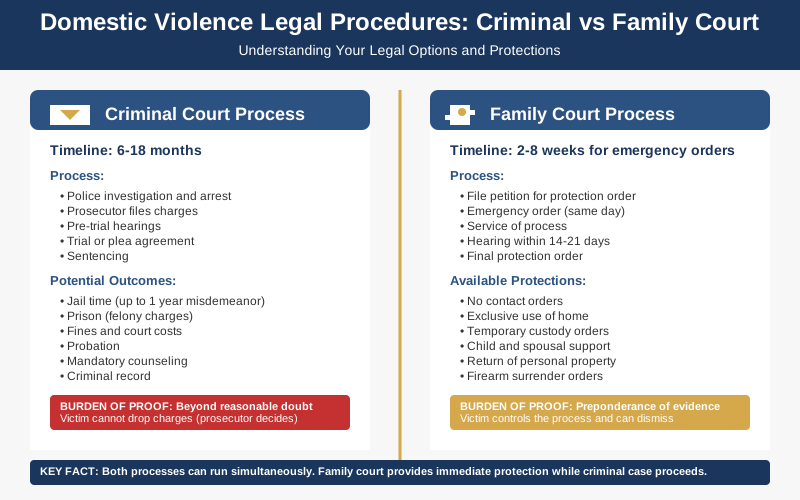
Virginia demonstrates this dual approach clearly. The state's criminal code includes specific domestic violence charges with enhanced penalties for repeat offenses. But Virginia family courts handle protective orders under completely separate statutes with different evidence requirements and faster timelines.
Impact on Child Custody and Visitation Rights
Domestic violence allegations change everything in custody cases. Courts prioritize child safety above all other factors.
That said, proving domestic violence occurred can be challenging. Many incidents happen privately without witnesses. Physical evidence might be limited. And documentation often comes down to police reports, medical records, and testimony.
Most states now include domestic violence as a specific factor in custody determinations. Some states go further. Delaware law creates a rebuttable presumption that awarding custody to a domestic violence perpetrator isn't in the child's best interest. This means the abusive parent must prove they should get custody rather than the victim having to prove they shouldn't.
Supervised visitation becomes common in these cases. Professional supervisors monitor visits between the abusive parent and children. Costs typically range from 40 to 80 dollars per hour, paid by the abusive parent. And these arrangements can continue for months or years depending on the circumstances.
But custody decisions aren't automatically permanent. Courts can modify arrangements as situations change. Abusive parents who complete counseling, anger management, or substance abuse programs might gradually regain unsupervised time with their children.
Evidence Documentation and Legal Procedures
Documentation makes or breaks domestic violence cases in family court. Physical evidence matters. Photographs of injuries, damaged property, or threatening messages carry significant weight with judges.
Police reports provide official documentation even when no arrest occurs. Medical records establish patterns of injury over time. And witness statements from neighbors, family members, or coworkers can corroborate incidents.
Thing is, many victims don't think to document abuse while it's happening. Fear, shock, and survival instincts take precedence over evidence gathering. That's understandable but creates legal challenges later.
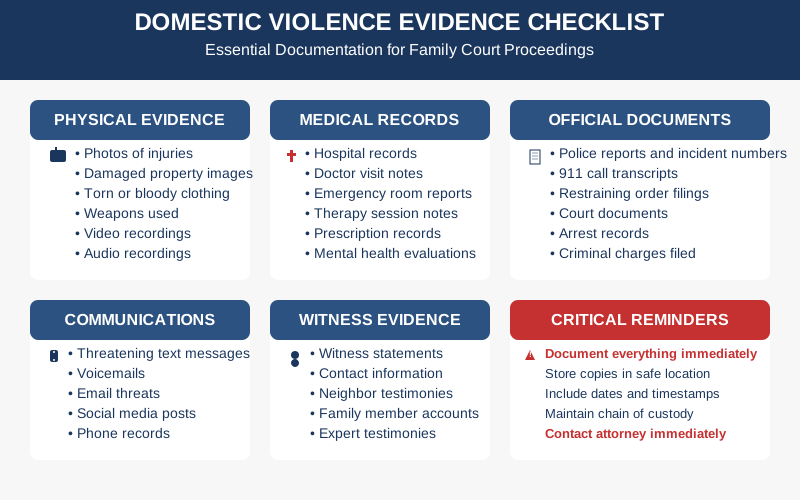
Phone records and text messages increasingly play major roles in modern cases. Screenshots of threatening texts, call logs showing harassment patterns, and voicemails preserve electronic evidence. But proper preservation matters - courts need authenticated copies, not just photos of phone screens.
Social media posts can also provide evidence. Abusers sometimes make threats or admissions online. And victims might post about incidents in real time, creating contemporaneous records of abuse.
The legal process typically moves faster in family court than criminal court. Protection order hearings happen within days or weeks. Temporary custody arrangements get decided quickly. And judges understand that domestic violence situations require immediate intervention.
Common Questions
Can I get a protection order without filing for divorce?
Yes, protection orders are separate from divorce proceedings. You can obtain immediate protection without starting any other family court cases.
What happens if my abuser violates a restraining order?
Restraining order violations are typically criminal offenses punishable by fines and jail time. Contact police immediately and document the violation for potential contempt of court proceedings.
Will domestic violence charges affect my spouse's ability to own guns?
Federal law prohibits gun ownership for people convicted of domestic violence crimes or subject to certain protection orders. This restriction applies nationwide regardless of state laws.
Legal Disclaimer: This article provides general information about domestic violence laws and shouldn't be considered legal advice. Laws vary significantly by state and individual circumstances. Consult with a qualified family law attorney for guidance specific to your situation. If you're in immediate danger, contact 911 or the National Domestic Violence Hotline at 1-800-799-7233.
⚖️ Get Free Legal Help
Need legal assistance with Domestic Violence matters? Our platform connects you with experienced attorneys who can help. Describe your situation, and local lawyers will review your case and reach out to you directly.
Start Your Free Case Evaluation