Deportation Defense: Legal Strategies to Fight Removal from the United States
Deportation proceedings can tear families apart and destroy lives built over decades. More than 400,000 people face removal proceedings in U.S. immigration courts each year, but many don't realize they have legal options to fight back.
What is Deportation Defense
Deportation defense represents the legal strategies and procedures available to individuals facing removal from the United States. The process isn't simple. Immigration courts operate under different rules than criminal or civil courts, and the stakes couldn't be higher.
Most people think deportation only affects those who entered illegally. That's wrong. Green card holders can face removal for various reasons, including certain criminal convictions, fraud allegations, or violations of immigration law. Even naturalized citizens can face denaturalization proceedings in extreme cases.
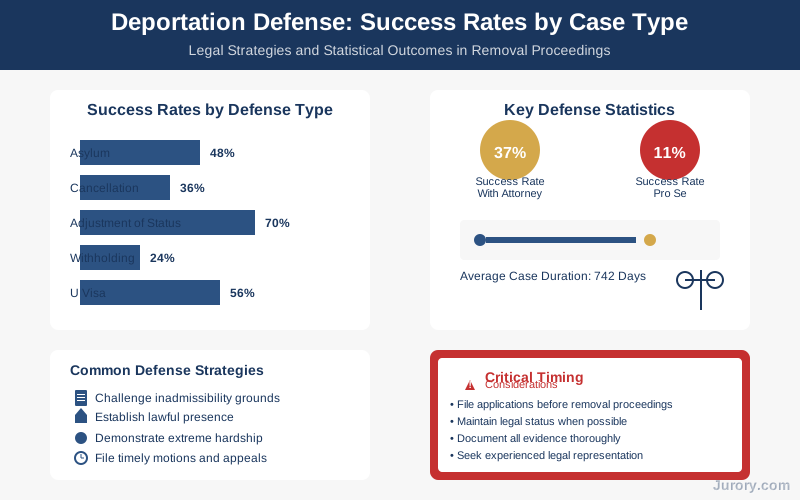
The government must prove its case for removal. But here's the catch - individuals in removal proceedings don't have the right to appointed counsel if they can't afford an attorney. About 37 percent of people in immigration court represent themselves, and their success rates are dramatically lower than those with legal representation.
Defense strategies fall into several categories. Relief from removal includes cancellation of removal, asylum, withholding of removal, and protection under the Convention Against Torture. Some cases involve challenging the government's charges entirely. Others focus on discretionary relief that allows judges to grant permission to stay despite deportability.
Timing matters enormously. Many forms of relief have strict deadlines - asylum applications must typically be filed within one year of arrival, though exceptions exist. Missing these deadlines can eliminate options permanently.
How Deportation Defense Works
⚖️ Need legal help? Submit your case for a free evaluation and get matched with qualified Immigration Law attorneys.
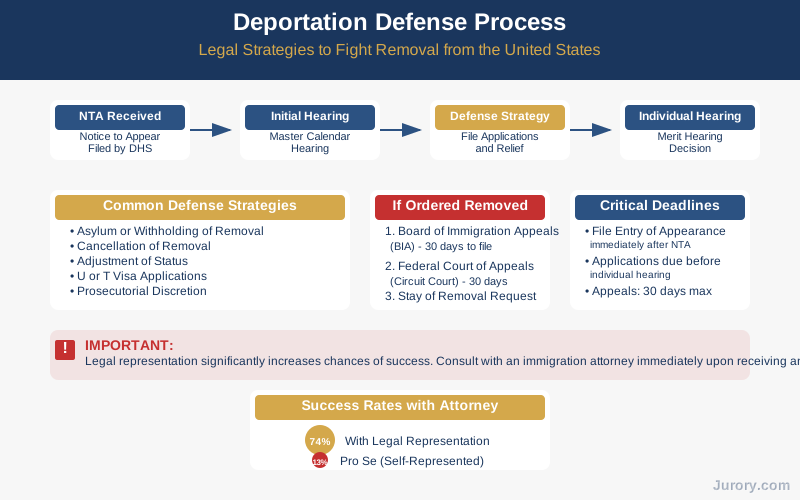
The removal process begins with a Notice to Appear (NTA). This document. It lists the charges against the individual and schedules the first court hearing. That's when the clock starts ticking.
Immigration court proceedings follow a specific sequence. The master calendar hearing comes first, where the judge explains rights and the individual responds to charges. Pleading "not guilty" doesn't mean denying the facts - it means challenging the government's legal right to remove you.
After the master calendar hearing, cases move to individual hearings where evidence is presented. The government goes first, presenting documents and witness testimony to prove removability. Then the defense presents its case, which might include applications for relief, witness testimony, and country condition evidence.
Take Nevada's immigration court system as an example - cases there average 1,100 days from filing to completion. The Las Vegas immigration court handles over 15,000 pending cases, creating massive backlogs that can actually benefit defense strategy by providing more time to prepare.
Document preparation consumes most of the work. Asylum cases require detailed personal statements, country condition reports, expert testimony, and medical or psychological evaluations. Cancellation of removal cases need extensive proof of hardship to qualifying relatives and evidence of good moral character.
And here's something many don't realize: immigration court decisions can be appealed to the Board of Immigration Appeals (BIA), and sometimes to federal circuit courts. The appeals process can add years to cases, during which individuals often remain in the United States.
Costs and Fees
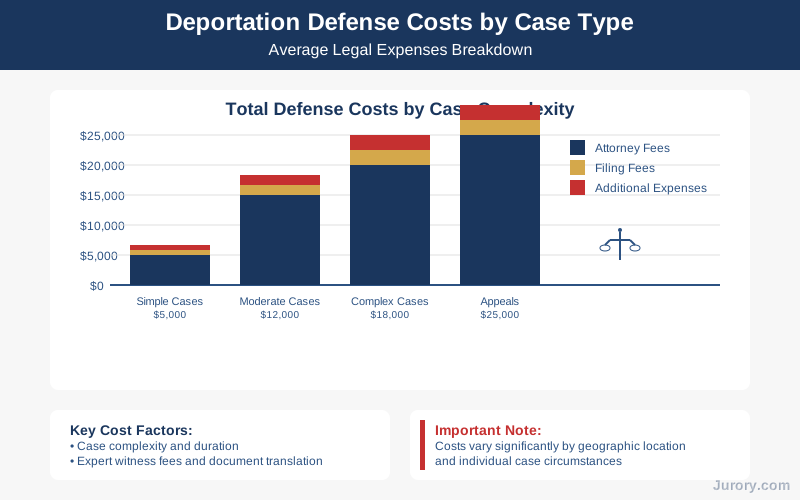
Deportation defense costs vary wildly based on case complexity. Basic removal cases with no relief applications might cost 3,000 to 7,000 dollars. Complex asylum cases often run 10,000 to 25,000 dollars or more.
Attorney fees represent the largest expense. Most immigration attorneys charge between 150 and 500 dollars per hour, depending on location and experience. Many offer flat fee arrangements - a straightforward cancellation of removal case might cost 8,000 dollars, while asylum cases often start at 12,000 dollars.
Court filing fees add up quickly. Form I-589 for asylum applications costs nothing, but other applications carry hefty fees. The I-212 waiver application costs 930 dollars, and I-601 hardship waivers run 715 dollars each.
Translation costs can't be ignored. Every foreign document needs certified English translation, typically costing 25 to 40 dollars per page. Birth certificates, marriage licenses, court records, and school transcripts add up fast - expect 500 to 2,000 dollars in translation fees for document-heavy cases.
Expert witnesses charge premium rates. Country condition experts typically cost 200 to 400 dollars per hour for report preparation, plus testimony fees. Psychological evaluations for trauma victims run 1,500 to 3,500 dollars each.
The reality is harsh: quality legal representation costs money most people facing deportation don't have. But the alternative - proceeding without counsel - succeeds in only about 10 percent of cases compared to 60 percent with attorneys.
State-Specific Information
Immigration law is federal, but local practices vary dramatically. New Mexico's Albuquerque immigration court, for example, has one of the nation's lowest asylum grant rates at just 12 percent. The court's conservative reputation affects case strategy - attorneys often advise pursuing other forms of relief first.
Maine presents unique challenges despite having no dedicated immigration court. Cases get heard by visiting judges in Portland, creating scheduling nightmares but also opportunities. The state's small immigrant population means fewer specialized attorneys - most charge premium rates due to limited competition.
Minnesota's immigration courts in Minneapolis and Bloomington handle high volumes of asylum cases from East African communities. These courts see asylum grant rates around 25 percent, better than the national average of 20 percent. Local attorneys develop expertise in country conditions for Somalia, Ethiopia, and Sudan.
Utah's immigration court system struggles with massive backlogs - over 18,000 pending cases as of 2023. The Salt Lake City court schedules hearings three to four years out, giving defense attorneys substantial preparation time but also keeping families in limbo.
Nevada's Las Vegas court serves a huge geographic area including parts of Arizona and Utah. Travel costs for attorneys and clients add significant expense, but the court's diverse immigrant population creates opportunities for group preparation of country condition evidence.
Local detention facilities also affect strategy. States with family detention centers, like those in Nevada and Minnesota, require different approaches than non-detained cases. Detained individuals face compressed timelines and limited access to evidence gathering.
Common Mistakes to Avoid
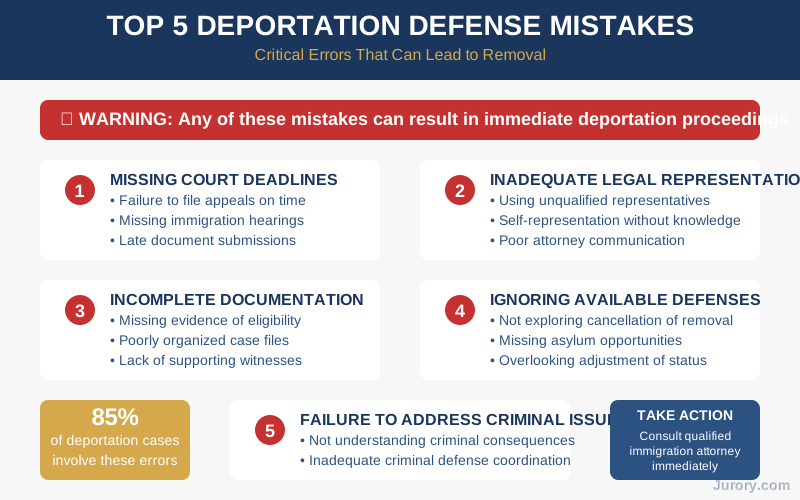
- Failing to appear in court: Missing immigration court hearings results in automatic removal orders in absentia. These orders are extremely difficult to reopen and eliminate most defense options permanently.
- Lying to immigration officials: Any misrepresentation to immigration authorities, including minor lies about entry dates or family relationships, can result in permanent bars to relief and additional deportation grounds.
- Waiting too long to seek legal help: Many forms of relief have strict deadlines or require continuous presence in the United States. Delaying consultation with immigration attorneys can eliminate options that might have been available earlier.
- Pleading guilty to criminal charges without immigration advice: Criminal convictions can trigger deportation for non-citizens. Even minor offenses like shoplifting or marijuana possession can have severe immigration consequences that criminal defense attorneys often don't understand.
- Applying for relief without proper documentation: Immigration applications require extensive supporting evidence. Submitting incomplete applications wastes time, money, and can harm credibility with immigration judges who see the same mistakes repeatedly.
Frequently Asked Questions
Can green card holders be deported for any crime?
No, but many crimes can trigger removal proceedings for permanent residents. Aggravated felonies, crimes involving moral turpitude, and controlled substance offenses are the main categories that can lead to deportation. Even minor drug possession convictions can result in removal proceedings, though defenses may be available.
How long do deportation proceedings typically take?
Non-detained cases average 1,000 to 1,500 days from start to finish, depending on the court and case complexity. Detained cases move much faster, often completing within 60 to 90 days. Appeals to the Board of Immigration Appeals can add another 400 to 600 days to the process.
What happens if someone loses their deportation case?
Individuals have 30 days to file an appeal with the Board of Immigration Appeals after an immigration judge orders removal. If no appeal is filed or the appeal fails, ICE can execute the removal order. Some people may be eligible for stays of removal or other post-order relief in limited circumstances.
⚖️ Get Free Legal Help
Need legal assistance with Immigration Law matters? Our platform connects you with experienced attorneys who can help. Describe your situation, and local lawyers will review your case and reach out to you directly.
Start Your Free Case Evaluation