Child Support Laws: Payment Rules, Calculations, and State Requirements
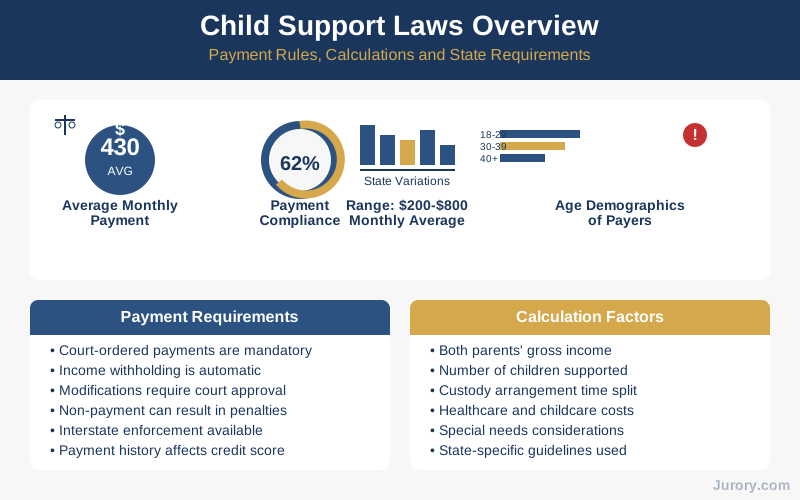
About 13.4 million parents receive child support payments in America, but nearly half don't get the full amount they're owed. That's roughly 22 billion dollars in unpaid support each year, affecting children's basic needs like food, housing, and healthcare.
What Child Support Actually Covers
Child support isn't charity. It's a legal obligation designed to ensure both parents contribute financially to their child's upbringing, even when they don't live together.
The money covers basic necessities first: housing, food, clothing, and healthcare. But support can also include childcare costs, educational expenses, and extracurricular activities. Some states require parents to split medical insurance premiums and uncovered medical bills separately from the basic support amount.
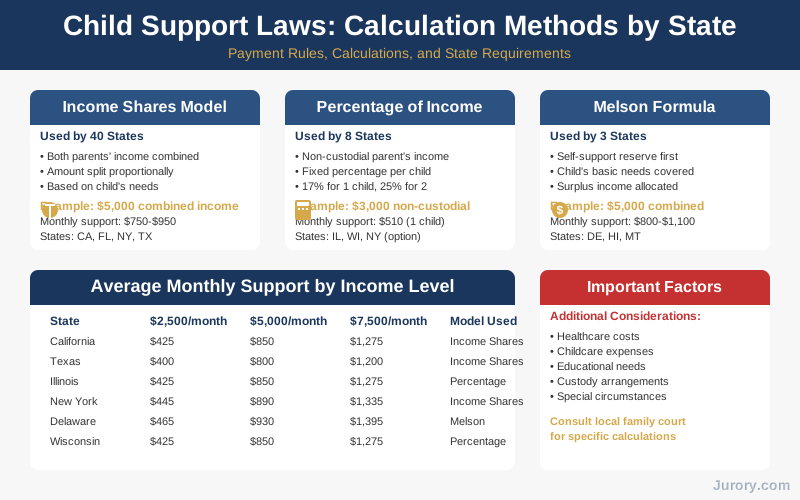
Courts calculate support using specific formulas that consider both parents' incomes, the number of children, and how much time each parent spends with the kids. Most states use either an "income shares" model or a "percentage of income" approach. The income shares model treats child support like the parents were still married and pooling resources. Seems logical.
But here's where it gets tricky: the paying parent can't dictate how the receiving parent spends the money, and courts typically won't require detailed accounting unless there's evidence of serious misuse.
How Child Support Gets Calculated and Enforced
⚖️ Need legal help? Submit your case for a free evaluation and get matched with qualified Family Law attorneys.
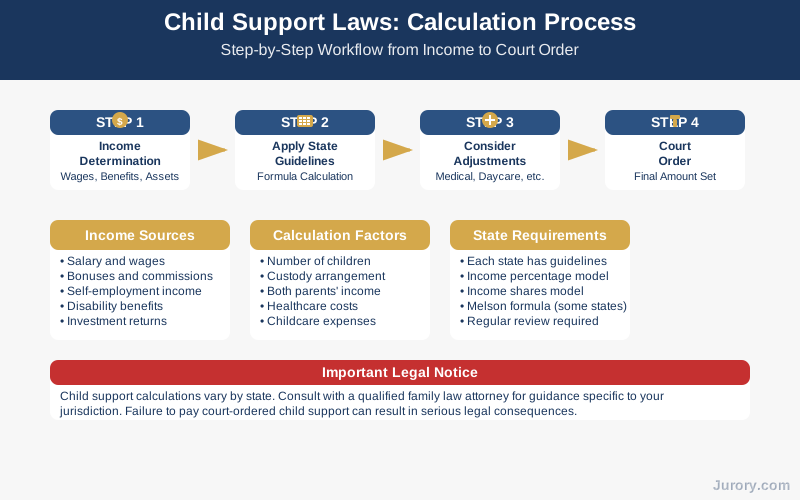
Every state has its own calculation method, but they all start with gross income from all sources. That includes wages, tips, bonuses, rental income, unemployment benefits, and even lottery winnings.
Courts then subtract certain deductions like taxes, mandatory retirement contributions, and support payments for other children. The resulting figure gets plugged into the state's formula along with custody arrangements and the other parent's income.
Most states update their guidelines every four years. And the amounts can change significantly based on income levels and custody time.
Enforcement happens through multiple agencies working together. State child support offices can garnish wages, intercept tax refunds, seize bank accounts, and suspend driver's licenses or professional licenses. They can even deny passport applications for parents who owe more than 2,500 dollars in back support.
What Child Support Actually Costs
Filing for child support typically costs between 25 and 35 dollars in most states, though some waive fees for low-income parents. But that's just the beginning.
Private attorneys charge anywhere from 200 to 500 dollars per hour for child support cases. A simple modification might cost 1,500 dollars, while a contested case with complex income issues can run 5,000 to 10,000 dollars or more.
That said, many parents handle basic modifications themselves using state-provided forms and online calculators.
How Different States Handle Child Support
Texas uses a straight percentage system that's surprisingly simple: one child gets 20 percent of the paying parent's net income, two children get 25 percent, and three children get 30 percent. The state caps support calculations at 9,200 dollars monthly net income, though courts can go higher for wealthy parents.
Louisiana takes a different approach with its income shares model that factors in both parents' earnings and considers the actual costs of raising children at different income levels. The state also allows courts to deviate from guidelines more easily than Texas does.
Alaska has some of the highest support amounts in the country because of higher living costs and substantial oil industry wages. The state's formula includes a cost-of-living adjustment that can increase support by up to 50 percent in certain areas.
Wyoming uses income shares but caps the income consideration at about 40,000 dollars combined monthly gross income. Above that threshold, courts have more discretion in setting amounts.
Kansas recently updated its guidelines to give more credit for parenting time, reducing support obligations when the paying parent has the children more than 91 overnights per year.
Mistakes That Cost Parents Money
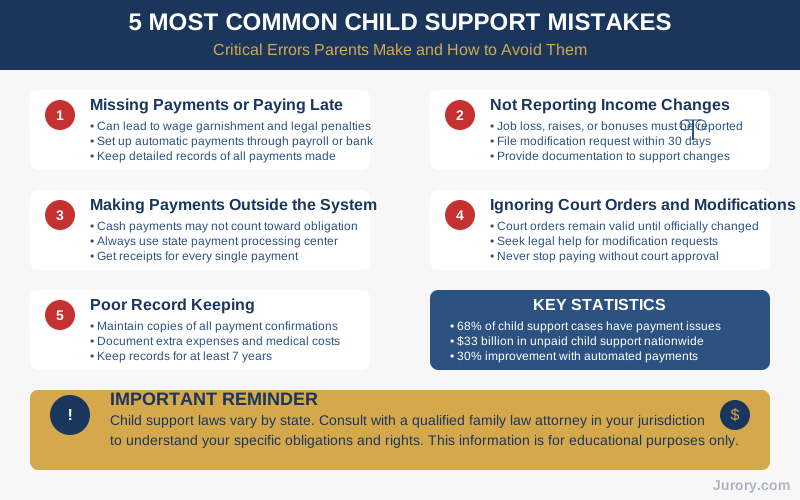
Here's what trips people up:
• Waiting too long to file - support typically can't be ordered retroactively before the filing date, so delays cost money
• Not reporting income changes quickly enough, which can lead to either overpayments or underpayments that create legal problems later
• Assuming verbal agreements with the other parent will hold up in court (they won't)
• Paying support directly to the other parent instead of through the state disbursement unit
• Ignoring modification opportunities when income or custody arrangements change significantly
Frequently Asked Questions
Can I stop paying child support if I lose my job?
Not automatically. You need to file for a modification immediately because support obligations continue until a court officially changes them. Back support keeps accumulating even if you're unemployed.
What happens if the other parent won't let me see my kids but I'm paying support?
Child support and visitation are separate legal issues. Courts won't reduce your support obligation because of custody problems, and you can't legally stop paying support because you're being denied access to your children.
How long does child support last?
Usually until the child turns 18 or graduates high school, whichever comes later. But some states extend support through college, and support for disabled adult children can continue indefinitely.
⚖️ Get Free Legal Help
Need legal assistance with Family Law matters? Our platform connects you with experienced attorneys who can help. Describe your situation, and local lawyers will review your case and reach out to you directly.
Start Your Free Case Evaluation