California Hit and Run Laws: Legal Consequences When Vehicle Registration Complicates Your Case
Hit-and-run accidents happen every 43 seconds in America. But this San Francisco case presents a perfect storm of legal complications that transform a potentially minor traffic incident into a serious felony investigation with cross-county jurisdiction issues, registration problems, adding layers of complexity to an already dire situation.
Understanding California's Hit and Run Laws
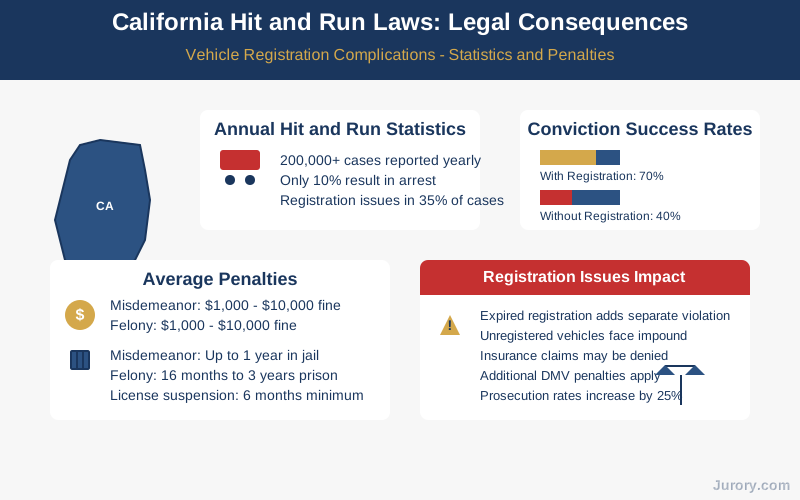
California doesn't mess around with hit-and-run cases. The state's Vehicle Code sections 20001 and 20002 create a legal framework that's both straightforward and unforgiving, designed to ensure drivers face consequences when they flee accident scenes rather than fulfill their legal duties.
Here's the thing: California law requires every driver involved in an accident to stop immediately at the scene, regardless of who caused the crash. Vehicle Code section 20003 makes this crystal clear. Doesn't matter if you're not at fault. Doesn't matter if the other party was jaywalking or running a red light.
The duty extends beyond just stopping. Drivers must provide their name, address, driver's license number, and vehicle registration information to the other party or investigating officers. And here's where things get complicated in our scenario.
When someone gets injured, Vehicle Code section 20001 kicks in with felony-level consequences. The law demands that drivers render reasonable assistance to injured persons, including calling emergency services and providing first aid if they're capable. Skip this step? You're looking at potential prison time.
But the statute doesn't care about your panic response. Legal obligations remain the same whether you're calm, terrified, or completely overwhelmed by the situation unfolding in front of you.
Misdemeanor vs Felony: The Injury Makes All the Difference
⚖️ Need legal help? Submit your case for a free evaluation and get matched with qualified Criminal Law Crime attorneys.
California draws a bright line between property damage and bodily injury hit-and-runs. Property damage only? That's Vehicle Code section 20002, a misdemeanor with penalties including up to six months in county jail and fines reaching 1,000 dollars.
Someone gets hurt? Now you're dealing with Vehicle Code section 20001. Felony territory. The penalties jump to one year minimum in state prison, with maximum sentences reaching four years if the injuries are severe.
Our San Francisco scenario clearly falls under section 20001 since the pedestrian was struck by the vehicle. The fact that the pedestrian ran against the signal doesn't change the driver's legal obligations once the accident occurred.
Turns out, California prosecutors don't need to prove you caused the accident to secure a hit-and-run conviction. They only need to prove three things: you were involved in an accident, someone got injured, and you left without fulfilling your legal duties. The pedestrian's fault doesn't matter for the hit-and-run charges.
That's the cruel irony here. Even if the driver bears zero responsibility for causing the collision, fleeing the scene creates an entirely separate crime with serious consequences.
Vehicle Registration Complications and Investigation Challenges
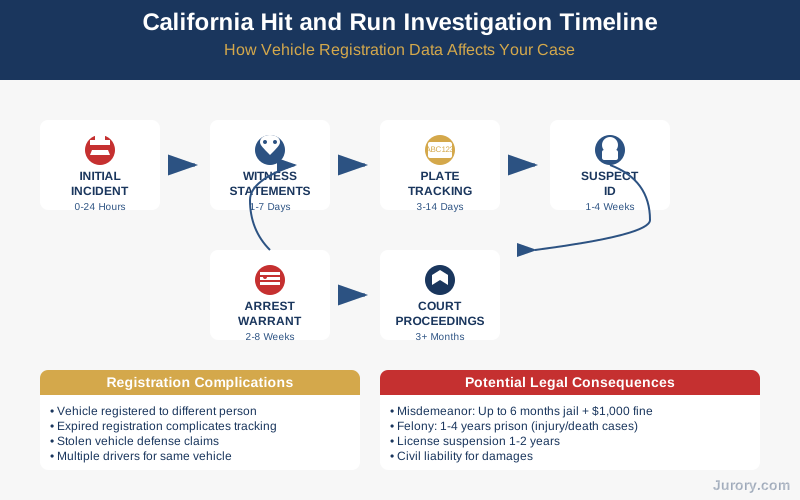
The registration issue in this case creates a fascinating legal puzzle that investigators deal with more often than you'd think. When a vehicle remains registered under a previous owner's name, law enforcement typically starts their investigation by contacting the registered owner.
California Vehicle Code section 5602 requires new owners to transfer registration within 10 days of purchase. Failing to do this doesn't just complicate hit-and-run investigations - it can result in additional penalties and fines reaching 250 dollars.
But here's where the previous owner's situation gets tricky. If they legitimately sold the vehicle but didn't file proper paperwork with the DMV, they could face initial questioning about the accident. Smart previous owners file a Notice of Transfer and Release of Liability with the California DMV immediately after selling.
Cross-County Jurisdiction: How California Handles Multi-County Cases
California's statewide jurisdiction means that living in different counties doesn't protect anyone from prosecution. The San Francisco District Attorney's office can prosecute this case regardless of where the driver currently stays in Berkeley or where the previous owner lives.
The investigation will likely involve multiple law enforcement agencies sharing information and resources. Berkeley police might assist with locating the driver, while San Francisco handles the primary investigation and any eventual prosecution.
State-by-State Penalty Comparison: California's Tough Stance
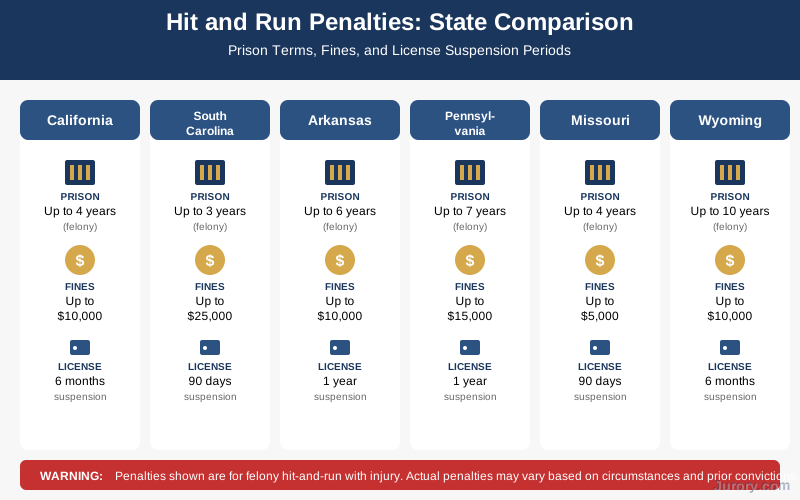
California's hit-and-run penalties rank among America's harshest. Compare this to other states and you'll see just how seriously California treats these cases.
South Carolina treats injury hit-and-runs as felonies with 1 to 10 years in prison and fines up to 5,000 dollars. Arkansas imposes 4 to 12 years for injury cases. Pennsylvania can sentence offenders to 7 years maximum with 15,000 dollar fines.
Missouri takes a different approach, with penalties ranging from 4 years to life imprisonment depending on injury severity. Wyoming keeps things simpler: up to 10 years in prison and 10,000 dollars in fines for injury hit-and-runs.
Still, California's combination of mandatory minimums, license suspension periods, and civil liability exposure makes it one of the toughest states for hit-and-run defendants.
Civil Liability and Comparative Negligence Rules
The criminal charges represent just one part of this driver's legal problems. California's pure comparative negligence system means that even though the pedestrian ran against the signal, the driver could still face significant civil liability for fleeing the scene.
Here's how comparative negligence works in California: if a jury determines the pedestrian was 70 percent at fault for running against the signal, but the driver was 30 percent at fault for leaving the scene, the driver pays 30 percent of the total damages. Those damages could include medical bills, lost wages, pain and suffering, and punitive damages.
The hit-and-run itself often becomes evidence of consciousness of guilt in civil cases. Juries tend to view fleeing drivers unfavorably, even when the underlying accident wasn't entirely their fault.
Most people think leaving the scene only affects criminal liability. They're wrong. Civil attorneys routinely use hit-and-run behavior to argue for higher damage awards and punitive damages designed to punish the defendant's conduct.
Investigation Timeline and Prosecution Strategy
California's three-year statute of limitations for felony hit-and-run gives prosecutors plenty of time to build their case. But most investigations move much faster than that, especially with witness photos of license plates.
Expect law enforcement to contact the registered owner within days of the incident. Once they determine the registered owner wasn't driving, they'll work to identify the actual driver through various investigative techniques. Bank records, DMV transfers, insurance policies, and witness interviews all become part of the puzzle.
The driver's decision to consult an attorney was smart. But the advice to wait for law enforcement contact rather than proactively reporting creates additional risks and potentially longer sentences if convicted.
Legal Risks of Failing to Self-Report
California Penal Code section 1203.4 allows some defendants to expunge hit-and-run convictions after completing probation. But judges consider cooperation and voluntary reporting when determining sentences and probation eligibility.
Waiting for arrest rather than turning yourself in often results in harsher treatment throughout the criminal justice process. Prosecutors view voluntary reporting as evidence of remorse and acceptance of responsibility.
The attorney's strategy might work. Then again, it might backfire spectacularly if law enforcement interprets the delay as evidence of ongoing flight from justice.
Common Mistakes That Make Everything Worse
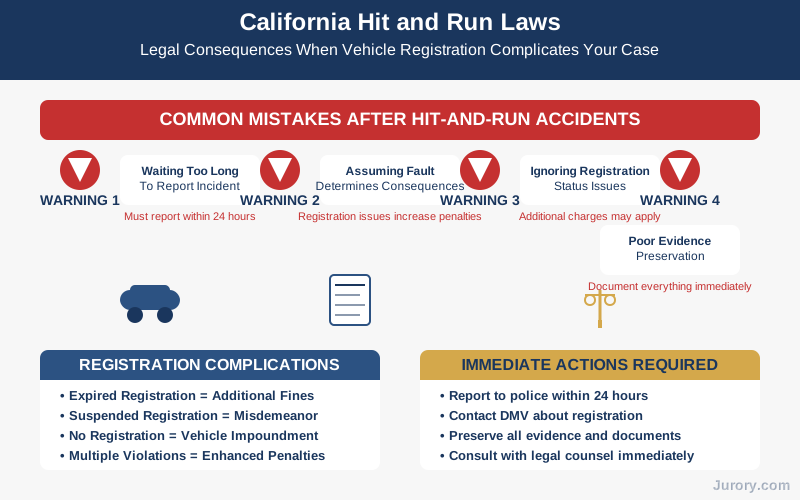
- Assuming the other party's fault eliminates your duty to stop and render aid
- Thinking vehicle registration under someone else's name provides legal protection
- Waiting weeks or months before consulting an attorney about hit-and-run exposure
- Failing to preserve evidence like dashcam footage or witness contact information that might help your defense
- Not understanding that California's comparative negligence rules still allow civil liability even when you're not primarily at fault
Frequently Asked Questions
Can I be charged with hit-and-run if the other person caused the accident?
Yes, absolutely. California law requires all drivers involved in accidents to stop and fulfill legal duties regardless of fault. The hit-and-run charge focuses on your behavior after the accident, not who caused it initially.
Does vehicle registration under someone else's name affect my hit-and-run liability?
Not at all. Criminal liability follows the driver, not the registered owner. You'll still face full hit-and-run penalties, plus potential additional charges for driving an improperly registered vehicle under California Vehicle Code section 5602.
How long do California prosecutors have to file hit-and-run charges?
Three years from the incident date for felony hit-and-run cases involving injury. Misdemeanor property-damage cases have a one-year statute of limitations. But don't count on delays - most cases get filed within months when there's solid evidence.
⚖️ Get Free Legal Help
Need legal assistance with Criminal Law Crime matters? Our platform connects you with experienced attorneys who can help. Describe your situation, and local lawyers will review your case and reach out to you directly.
Start Your Free Case Evaluation