California First DUI Offense: Penalties, Costs, and Defense Strategies That Actually Work
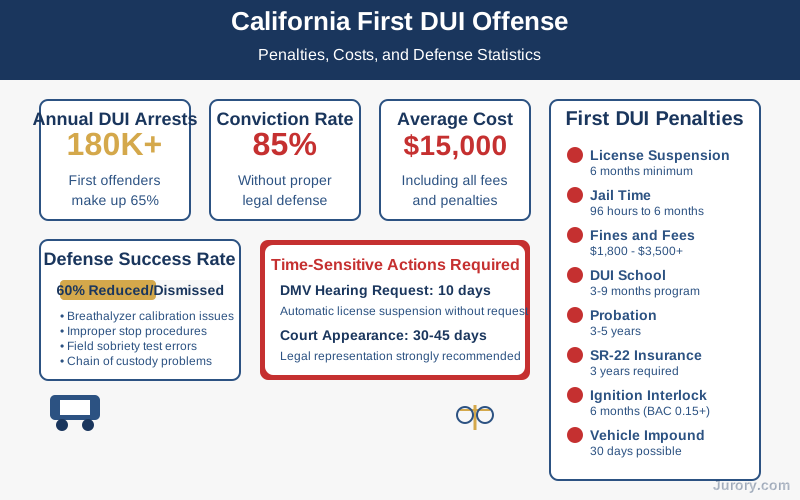
Getting arrested for DUI in California costs the average person about $10,000 even on a first offense, and that's before you factor in the long-term insurance hikes that can add thousands more over the next several years. Roughly 200,000 people get DUI arrests in California every year. Most think they're automatically guilty.
What Counts as a First DUI Offense in California
California defines DUI as driving with a blood alcohol content of 0.08 percent or higher, or being under the influence of alcohol or drugs to the degree that you can't drive safely. Simple enough. But the state treats your first DUI differently than repeat offenses, which means lighter penalties but still serious consequences that'll affect your life for years.
And here's something most people don't know: California has two separate cases for every DUI arrest. The criminal case happens in court, while the DMV runs an administrative case that can suspend your license even if you win in criminal court. You've got just 10 days from your arrest date to request a DMV hearing, or they'll automatically suspend your license in 30 days.
The arresting officer takes your physical license on the spot and gives you a pink temporary license that's good for 30 days. That pink slip is your lifeline. Don't lose it.
Criminal Penalties for First DUI in California
⚖️ Need legal help? Submit your case for a free evaluation and get matched with qualified DUI & DWI attorneys.
California Vehicle Code Section 23152 spells out the punishment for first-time DUI offenders, and it's not pretty even though it's considered a misdemeanor. You're looking at up to six months in county jail, though most first-time offenders get probation instead of actual jail time if they don't have aggravating factors like an accident or extremely high BAC.
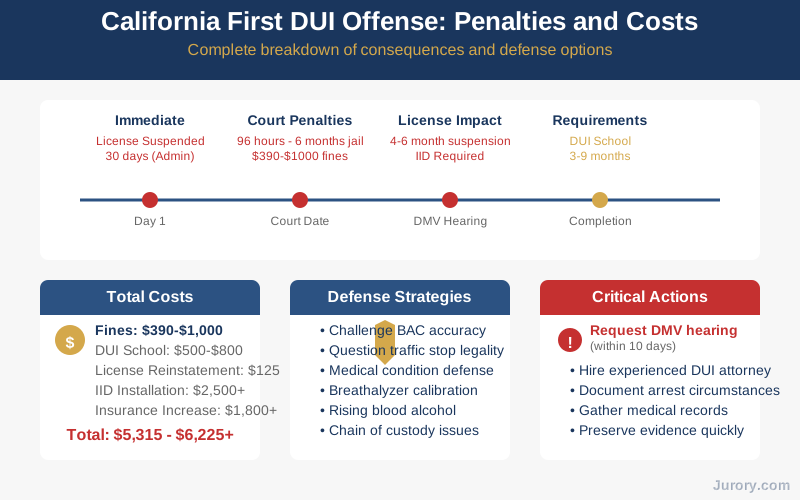
Fines start at $390 but that's just the base fine before all the add-ons that California loves to tack on. The total fine package usually hits $1,800 to $2,000 when you include penalty assessments, court fees, and other charges. Then there's the DUI program.
Every first-time DUI conviction requires completing a three-month alcohol education program that costs about $500. Miss a class? You start over. And California requires you to install an ignition interlock device for six months if you want to keep driving during your license suspension, which costs about $70 per month plus installation fees.
But here's the catch: you can avoid some penalties with the right defense strategy.
DMV License Suspension Process
The DMV suspension kicks in 30 days after arrest unless you request a hearing within 10 days. No exceptions. California's Administrative Per Se law means they can suspend your license based solely on test results or refusal to test, completely separate from any criminal case outcome.
First offense suspension lasts four months for failing the chemical test, or one year if you refused testing. And refusing the test doesn't help your criminal case either - prosecutors can use the refusal as evidence of guilt. The DMV hearing gives you a chance to challenge the suspension, but you need to act fast and know what you're doing.
Most people skip the DMV hearing because they don't understand how it works. Big mistake. Winning the DMV hearing means keeping your license even if you lose the criminal case. The hearing focuses on three questions: did the officer have reasonable suspicion to stop you, probable cause to arrest you, and was your BAC 0.08 or higher at the time of driving?
Total Cost Breakdown
Here's what a California first DUI actually costs when you add everything up:
Base fines and fees hit $1,800 to $2,000 right off the bat. DUI school costs another $500 for the three-month program. Ignition interlock device installation runs $100, plus $70 monthly for six months adds $520. And that's just getting started.
License reinstatement fee costs $125. If you need SR-22 insurance filing, expect to pay $25 for the filing plus dramatically higher insurance rates - often double or triple your previous premium for three years. Attorney fees for decent representation range from $2,500 to $5,000, but can save you money in the long run by reducing other penalties.
Towing and impound fees can add $300 to $500 if your car got towed after arrest. Some counties require vehicle impoundment for DUI arrests. Lost wages from court appearances, DMV hearings, and DUI classes can easily reach $1,000 to $3,000 depending on your job.
Total realistic cost: $8,000 to $12,000 for most first-time offenders.
How Other States Handle First DUI Compared to California
California's penalties look harsh until you compare them to other states. Kentucky hits first-time offenders with $200 to $500 in fines plus $375 in service fees, and license suspension lasts 30 to 120 days depending on BAC level. That's significantly lighter than California's approach.
Indiana takes a tougher stance with fines up to $5,000 and license suspension for 90 days to two years depending on circumstances. But Indiana doesn't require ignition interlock devices for all first offenders like California does. South Carolina suspends licenses for six months on first offense and requires completion of Alcohol and Drug Safety Action Program, which costs about $300.
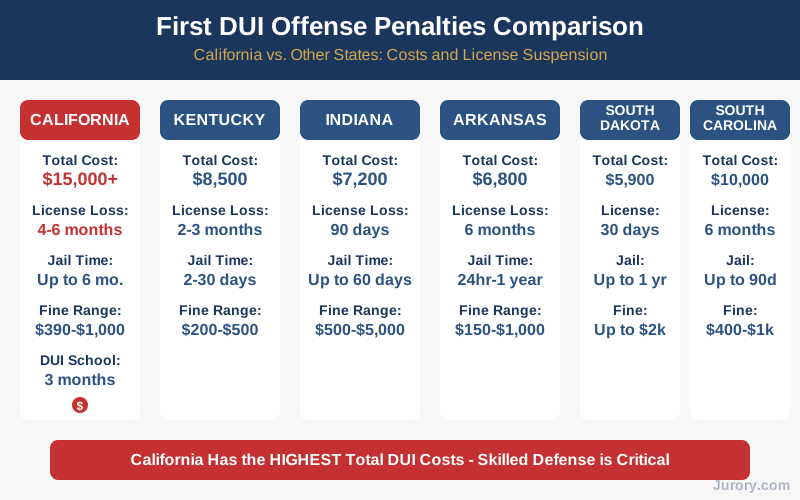
Arkansas gets really tough - even first-time DUI carries 24 hours to one year in jail, and judges can't suspend the minimum 24-hour requirement. South Dakota requires 48 hours minimum jail time for BAC over 0.17, but standard first offenses get lighter treatment with possible suspended sentence.
California falls in the middle range for most penalties, but the ignition interlock requirement and high total costs make it one of the more expensive states for DUI consequences.
Defense Strategies That Actually Work
Most people think DUI cases can't be won. Wrong. Experienced DUI attorneys win cases regularly by challenging evidence and procedure.
The traffic stop provides the first line of defense - officers need reasonable suspicion that you violated traffic laws or were driving impaired. No valid reason for the stop means everything after gets thrown out. Weaving within your lane isn't enough. Leaving a bar isn't reasonable suspicion by itself.
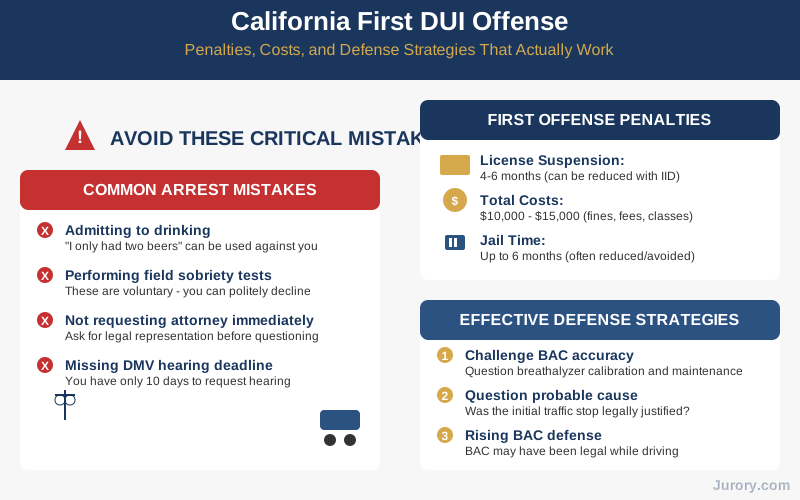
Field sobriety tests aren't mandatory and they're designed to fail. You can legally refuse them in California without penalty. And these tests have high error rates even for sober people due to medical conditions, fatigue, nervousness, or poor road conditions. Weather matters. Lighting matters. Your shoes matter.
Breathalyzer machines require proper calibration and maintenance to produce accurate results. Defense attorneys know how to subpoena maintenance records and challenge machine reliability. Blood tests can be contaminated, improperly stored, or delayed too long to be accurate for determining BAC at time of driving.
The "rising BAC" defense argues your alcohol level was still climbing when you got tested, meaning you were under 0.08 while actually driving. This works best when you were arrested soon after your last drink.
Common Mistakes That Make Everything Worse
Here's what not to do if you get arrested for DUI:
• Talking too much during the arrest - anything you say gets used against you, and officers are trained to get you talking to gather evidence
• Missing the 10-day DMV hearing deadline, which means automatic license suspension with no chance to fight it
• Assuming you're automatically guilty because you failed a breath test - machines break, officers make mistakes, and procedures get violated all the time
• Hiring the cheapest attorney you can find instead of someone who focuses on DUI defense and knows local courts
• Pleading guilty at arraignment without exploring defense options first
What Happens at Court
Your first court appearance is the arraignment, where you enter a plea and get your court dates. Don't plead guilty here. Plead not guilty and ask for time to get an attorney if you don't have one yet.
Most DUI cases resolve through plea bargaining rather than trial. Prosecutors might reduce charges to "wet reckless" (reckless driving involving alcohol) which carries lighter penalties but still counts as a prior if you get another DUI within 10 years. Some cases get reduced to dry reckless driving, which doesn't count as a DUI prior.
Good plea deals depend on case weaknesses. Blood alcohol barely over 0.08? Clean driving record? No accident? These factors help negotiations. But prosecutors in some counties barely budge on DUI cases, especially in places like Orange County or Riverside County where they take a hard line.
Trial becomes an option when the evidence has problems or you've got nothing to lose. Jury trials for DUI take 2-3 days typically, and juries sometimes buy reasonable doubt arguments that prosecutors won't accept in plea negotiations.
Frequently Asked Questions
Can I get a restricted license during my DUI suspension in California?
Yes, but only after 30 days of hard suspension and only if you install an ignition interlock device. You'll need to complete enrollment in DUI school and file SR-22 insurance before the DMV will issue the restricted license.
Will a first DUI show up on background checks for employment?
Most likely yes, since DUI is a criminal conviction that appears on standard background checks. Some employers don't care about DUI unless driving is part of the job, but others have zero-tolerance policies for any criminal conviction.
How long does a first DUI stay on my record in California?
DUI convictions stay on your criminal record permanently unless you get it expunged, which is possible after completing probation. For DMV purposes, it counts as a prior offense for 10 years, meaning any new DUI within that time gets treated as a second offense.
⚖️ Get Free Legal Help
Need legal assistance with DUI & DWI matters? Our platform connects you with experienced attorneys who can help. Describe your situation, and local lawyers will review your case and reach out to you directly.
Start Your Free Case Evaluation