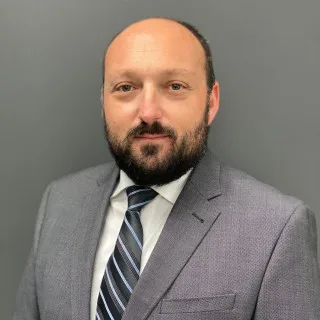
About Lisa Laws
Lisa Laws Kohli trained first as a scientist and then as a lawyer. She earned a B.S. in biochemistry from Indiana University–Bloomington in 1999, followed by an M.S. in microbiology and immunology from Indiana University–Purdue University at Indianapolis in 2003. A decade later she completed her J.D. at Indiana University Robert H. McKinney School of Law in 2012. That academic arc—hard science into law school—shapes how she approaches complex problems.
Her early years in the laboratory gave her a familiarity with experimental methods, data interpretation and the technical language that surrounds biological research. Those foundations are rarely taught in law school. Kohli brings that background to matters that require parsing dense scientific reports and translating technical concepts into clear legal analysis. Colleagues say that dual training can narrow the gap between expert evidence and legal argument.
After law school she entered legal practice and took on work that drew on both strands of her education. Over the years she has been admitted to practice in Indiana and in California. That bi-jurisdictional standing has allowed her to handle matters that cross state lines and to advise clients whose work spans multiple regulatory and commercial environments.
Her work style is methodical. She favors careful fact-gathering and clear writing. In litigation settings she focuses on evidence and testimony. In transactional or advisory roles she concentrates on drafting documents that reflect technical realities. Those approaches reflect a practical sensibility: translate complexity into usable information, then apply the appropriate legal tools.
Kohli has contributed to teams on matters that intersect with science, health and industry. She often collaborates with scientists, clinicians and regulatory specialists. Those collaborations are intended to ensure that legal positions rest on accurate technical foundations and that technical experts can explain their work in ways that matter to judges, regulators and business partners.
Outside the office she remains connected to scientific developments. Her training keeps her attentive to shifts in lab techniques, clinical research and regulatory change. She continues to draw on both her science and law backgrounds when advising clients. Her current practice concentrates on legal matters that involve scientific or technical issues and on representing clients in both Indiana and California.