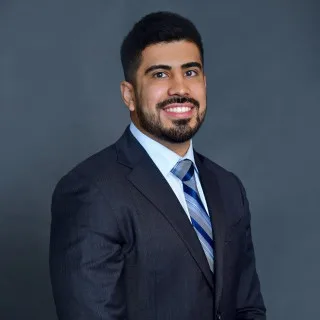
About J. Francisco
J. Francisco Tinoco built his legal foundation at Columbia. He earned a B.A. in American History from Columbia University in 1996 and completed his J.D. at Columbia Law School in 1999, where he studied international and comparative law. He also holds a certification from the Parker School of Foreign and Comparative Law.
He began his professional career in New York as an associate at Clifford Chance LLP in 1999. That role placed him inside a large international firm during the early years after law school. In 2004 he moved to Wiggin & Dana LLP in New Haven, Connecticut, where he continued as an associate and gained further experience in private practice. By 2008 he had established a presence in Texas, listed as having membership at the Law Office of J. Francisco Tinoco in McAllen. His path led to the formation of his own offices in the Rio Grande Valley, where he maintains practices under the names LAW OFFICES OF J.FRANCISCO TINOCO, P.C. and Law Office of J.F. Tinoco, P.C., based in Brownsville and other regional locations.
Tinoco holds admissions across multiple jurisdictions. He is admitted in Texas and New York, and he appears before the Fifth Circuit and the Federal Circuit. He is authorized to practice in the United States Bankruptcy Courts for the Northern and Southern Districts of Texas and before the Board of Immigration Appeals. He is also a member of the Washington D.C. Bar. Those credentials reflect work that spans state and federal systems and includes immigration and federal court matters.
Professional affiliations include membership in the State Bar of Texas, the Washington D.C. Bar, the American Immigration Lawyers Association (AILA), and the Hidalgo County Bar Association. He has maintained an ongoing association with his local bar groups while also engaging with national immigration practitioners through AILA. His record shows a blend of local practice and broader federal appearances.
His practice has evolved from large-firm beginnings to operating small, regionally based offices. That transition allowed him to shift from the staffing model of major New York and Connecticut firms to managing client relationships directly in South Texas. Clients encounter counsel who brings courtroom admissions across several federal venues and experience handling administrative matters before immigration tribunals.
Today he heads his own practice in the Rio Grande Valley, where he represents clients in immigration-related proceedings and other federal matters. His current practice concentrates on immigration and federal court work.