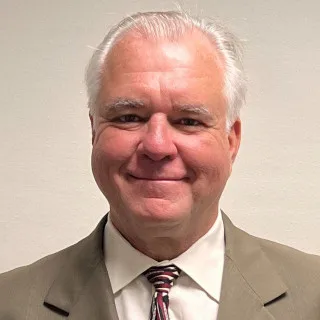
About Dr. Mark Allan
Dr. Mark Allan Mitchell took a path few lawyers follow. He began in laboratories and lecture halls, then moved into courtrooms. The shift did not happen overnight. It came after decades of scientific training and a later decision to study law.
He holds a Bachelor of Science in Biology and Chemistry from Baylor University (B.S., 1973). He earned a Master of Science in Physiology and Biochemistry at Idaho State University (M.S., 1976) and completed a Ph.D. in Neuro-Pharmacology and Physiology at the University of North Dakota (Ph.D., 1981). He also undertook a fellowship at the University of Missouri’s National Institute on Alcoholism and Alcohol Abuse where his work addressed subcellular mechanisms of chronic alcohol intoxication, physical dependence and withdrawal. Later he returned to formal legal study and received a Juris Doctor from the University of Tulsa (J.D., 1995).
His early career was firmly rooted in scientific research. The fellowship and doctoral work placed him at the intersection of physiology, pharmacology and the biochemical effects of alcohol. He published and presented in scientific contexts during that period, and his laboratory experience shaped how he approached complex technical questions.
After earning his law degree he transitioned into practice. He is admitted to practice in Oklahoma and before the Federal Circuit and the 10th Circuit. That mix of state and federal admissions has allowed him to handle litigation and appeals that require attention to technical subject matter as well as procedural detail.
He operates from The Mitchell Law Office. There he applies his combined background in science and law to the matters that come through his doors. Clients who face disputes that intersect with scientific, regulatory or technical facts find his dual training relevant. He has handled both trial-level work and appellate filings in federal and state forums.
Colleagues describe him as methodical in preparing cases and precise in argument. He approaches evidence the way he once approached experimental data: carefully, skeptical of easy conclusions, and attentive to how one detail affects the larger picture. He continues to maintain ties to scientific literature and periodically draws on that experience when evaluating technical expert testimony.
He currently concentrates his practice on matters in federal and state courts from The Mitchell Law Office.