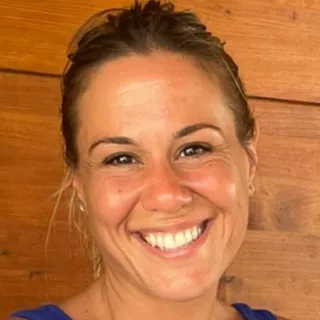
About Charles Oliver
Charles Oliver Wolff pursued an early academic life in the social sciences. He earned a B.A. in anthropology and linguistics from the University of New Mexico in 1984 and continued on to receive an M.A. from Cornell University in 1989. After several years rooted in those disciplines, he returned to formal legal study and earned his J.D. from Syracuse University College of Law in 2004.
Wolff’s pathway to law was not linear. His training in anthropology and linguistics preceded his legal education by nearly two decades. That background shaped an analytic habit and an attention to cultural and linguistic detail that he carried into practice. Sources of evidence, the construction of narrative, and how people communicate under stress are areas where his prior studies intersect with legal work.
Following law school, Wolff established a practice in New York. He is admitted to practice in the state of New York and has maintained an active role in the local legal community. Colleagues describe him as methodical and deliberate in case preparation. He has worked on matters that required careful factual reconstruction and clear explanation of complex events to non-expert factfinders.
His professional interests are informed by both his academic and legal training. He is comfortable assessing testimony and documentary records through multiple lenses — linguistic consistency, cultural context, and legal standards. That combination can be useful in cases that turn on witness credibility, document interpretation, or issues involving diverse populations.
Wolff has participated in bar-related activities and professional gatherings in New York. He has kept his practice current amid changes in court procedures and evidentiary rules. He does not publish widely, nor does he hold a prominent public-facing academic post, but he is known among peers for a steady approach to casework and an emphasis on clarity in written filings.
Clients and other lawyers who have worked with Wolff say he prefers plain language over jargon. He takes time to explain legal processes and the likely steps ahead. That practical orientation reflects both his academic past and his legal training.
Today he practices law in New York, drawing on a multidisciplinary background to address matters that arise in state courts and administrative forums. His current practice focuses on legal matters presented in New York.